
In contemporary interior design, the image of Guanyin (or Quan Yin) has transcended the boundaries of traditional temples. From minimalist lofts in New York to tea rooms in London, the Goddess of Compassion is frequently found as a focal point of serenity.
For many Western homeowners, the attraction is aesthetic and atmospheric rather than strictly religious. However, placing a religious icon involves navigating a delicate balance between design and cultural respect. Is it appropriate for non-Buddhists to own one? And more importantly, how does one position the statue to honor its origins while harmonizing with the home’s energy?
The short answer is: Yes, the image of Quan Yin is welcomed in secular homes. In Eastern tradition, she is not merely a deity to be worshipped but a “spatial anchor” representing the archetype of unconditional mercy.
Here is a comprehensive guide to understanding Quan Yin meaning, the specific Feng Shui principles for her placement, and the etiquette of maintaining such a piece in a modern living space.
The Symbolism: More Than a Statue
To understand placement, one must first understand the figure. Quan Yin (a translation of the Sanskrit Avalokiteshvara) is the Bodhisattva of Compassion—”The One Who Hears the Cries of the World.”
Historically, this figure represents the energy of Equanimity. Unlike fierce guardian deities that are meant to scare away evil spirits, Quan Yin’s function is to neutralize chaotic energy through gentleness. Visually, she is often depicted in white robes, sometimes holding a willow branch (for healing) or a vase of water (for soothing suffering).
Therefore, the placement of a Quan Yin statue is not just about decoration; it is about installing a visual cue for calmness. The location should reflect the statue’s function: to oversee, to protect, and to pacify.
The Core Principles: Elevation and Stability
In traditional Feng Shui and Asian architectural theory, the placement of any deity follows the “Commanding Position” rule.
- Never on the Floor: In Eastern cultures, the floor is associated with the mundane, the dirty, and the flow of footsteps. A deity must always be elevated—at least 30 inches off the ground—to show respect.
- Solid Support: The statue should have a solid wall behind it. Floating a statue in the middle of a room without backing leaves the energy “unsupported” and unstable.
- Eye Level: Ideally, the statue should sit at or slightly above eye level. Looking down on a deity is considered a breach of hierarchy; looking up (even slightly) fosters a psychological sense of reverence and aspiration.
Best Locations: The “Yes” Zones
1. Facing the Main Entrance (The Protector)
The most classical placement for a Quan Yin statue is facing the main door, but positioned inside the home.
- The Feng Shui Logic: The main door is the “Mouth of Qi,” where energy enters the home. By placing the Bodhisattva facing this entry, she serves as a spiritual filter, neutralizing the stress and chaotic energy brought in from the outside world.
- Design Tip: A console table in the foyer is ideal. Ensure she is not directly in line with the opening of the door if the draft is strong, but rather commanding the view of the entry.
2. The Living Room (The Center of Life)
As the central hub of the home, the living room is an appropriate space for Quan Yin statues, particularly fine art pieces like Blanc de Chine porcelain.
- The Feng Shui Logic: This is where the family gathers. Her presence here acts as a reminder of harmony during social interactions.
- Placement: Choose a high shelf or a mantelpiece. She should have a clear view of the room but should not be crowded by clutter, television screens, or loud speakers.
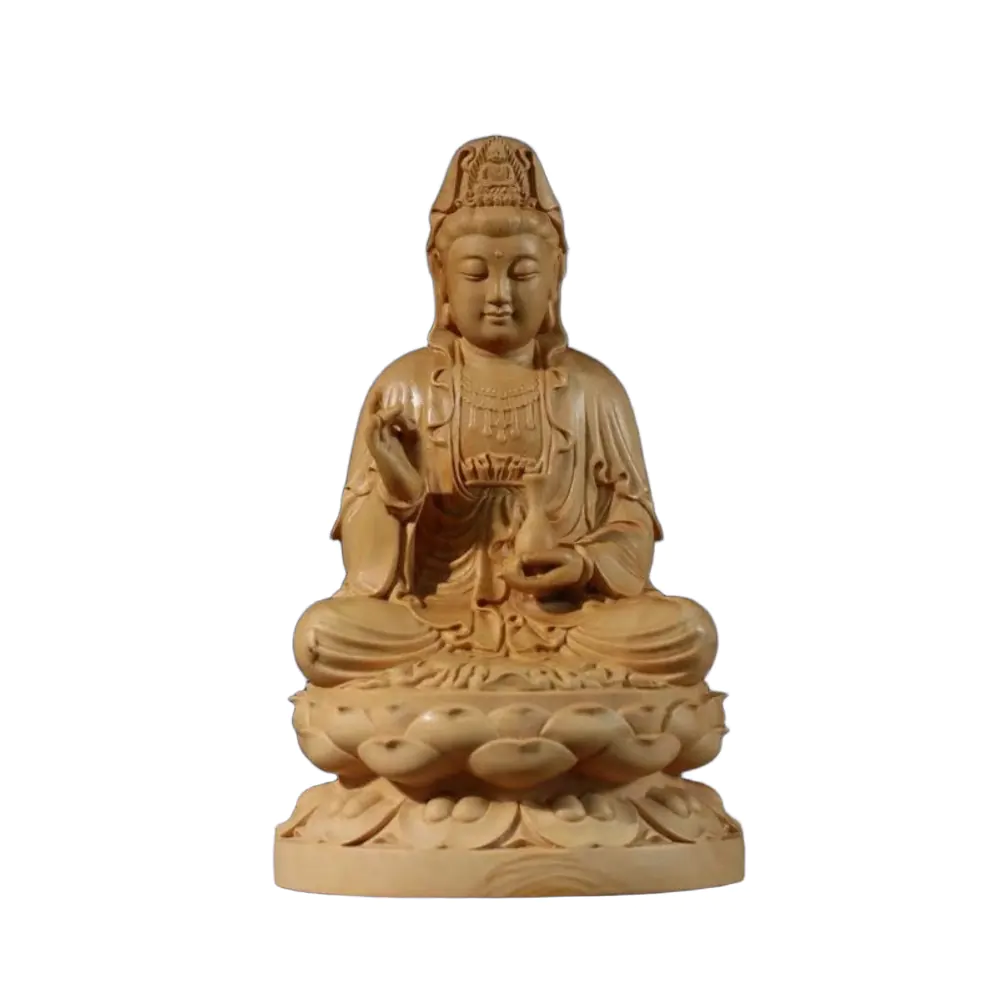
Yabai Wood Guanyin Statue – 9cm (3.5″) Natural Aromatic Figurine for Peace & Protection
- Rare Yabai Wood – Naturally aromatic, sustainably sourced cliff-cypress wood prized in Chinese tradition for its calming scent and spiritual energy.
- Symbol of Compassion – Guanyin, the Bodhisattva of Mercy, is revered for bringing peace, protection, and relief from suffering.
- Perfect for Altar or Desk – Its serene presence enhances meditation spaces, offices, or any area needing tranquility.
- Size: 9cm (3.5 inches) – Substantial yet compact, ideal for personal display.
3. A Dedicated Meditation Corner
For those who practice yoga or mindfulness, a small altar is the most functional placement.
- The Feng Shui Logic: Here, the statue transitions from a decorative protector to a functional tool for focus (a drishti).
- Setup: A simple floating shelf with a small plant and the statue is sufficient. Complexity is not required; cleanliness is.
Locations to Avoid: The “No” Zones
Placing a deity in an inappropriate location is not about incurring “bad luck” in a superstitious sense; it is about “Energetic Hygiene.” Certain bodily functions and household activities are considered incompatible with the purity the statue represents.
- The Bathroom: This is strictly forbidden. The bathroom is a place of waste and drainage. Placing a sacred object here is viewed as deeply disrespectful in all Buddhist and Taoist traditions.
- The Kitchen: While Taoism has specific “Kitchen Gods,” Quan Yin is generally considered too high-ranking for the kitchen. The energy of cooking involves killing (meat preparation), fire, and chaotic waste, which conflicts with her vow of non-violence and compassion.
- The Bedroom: This is a nuanced area. Generally, it is advised to avoid placing deities in the bedroom due to the privacy of changing clothes and intimacy.
- Small Space Exception: For studio apartments, the statue can be placed in the sleeping area if it is housed inside a cabinet with doors that can be closed at night, or separated by a screen.
Outdoor Placement: The Quan Yin Garden Statue
The search for Quan Yin garden statues is rising, reflecting a desire to bring spiritual aesthetics into nature. This is historically accurate; Quan Yin is often depicted in nature, seated on rocks or by the sea.
- Material Selection: Porous materials like standard ceramic will crack in freezing temperatures. For outdoors, opt for Granite, Resin, or Bronze.
- The “Mountain” Principle: Do not place the statue in the middle of a lawn where it looks lost. In Feng Shui, a deity needs a “Mountain” backing. Place the statue against a large rock, a wall, or a dense hedge to provide energetic support.
- Water Elements: Quan Yin is closely associated with water (often depicted crossing the sea). Placing her near a koi pond or fountain enhances the “Water” element, symbolizing the flow of compassion.
Maintenance and Cultural Etiquette
Owning a religious artifact carries a responsibility of maintenance.
- Dusting as Ritual: The most important form of respect is cleanliness. A statue covered in dust signifies neglect. Cleaning the statue should be done with a clean, soft cloth used only for that purpose.
- Offerings are Optional: In a secular home, one does not need to offer fruit or incense unless one wishes to. The “offering” is simply the respect of keeping the space clean.
- Dealing with Breakage: If a porcelain Quan Yin breaks, it is not an omen of doom. It is a lesson in impermanence (Anicca).
- Protocol: Do not glue the head back on. The traditional method of disposal is to wrap the broken pieces in red cloth or red paper (red acts as an energetic seal in Chinese culture) and discard them respectfully.
Summary
Ultimately, the presence of a Quan Yin statue in a modern home serves as a “Stop Sign” for the ego. Whether one is Buddhist or simply a lover of Eastern art, the statue functions as a mirror.
By placing her high, keeping her environment clean, and respecting the “No Zones,” the homeowner allows the object to do its work: anchoring the space with a frequency of quiet, enduring dignity.
