
Shopping for a wood room divider usually comes down to two classic Asian-inspired styles: the airy bamboo folding screen and the iconic Japanese shoji screen. They look related, but they solve different problems. Here’s a quick, honest comparison so you can pick the right one the first time.
The two contenders
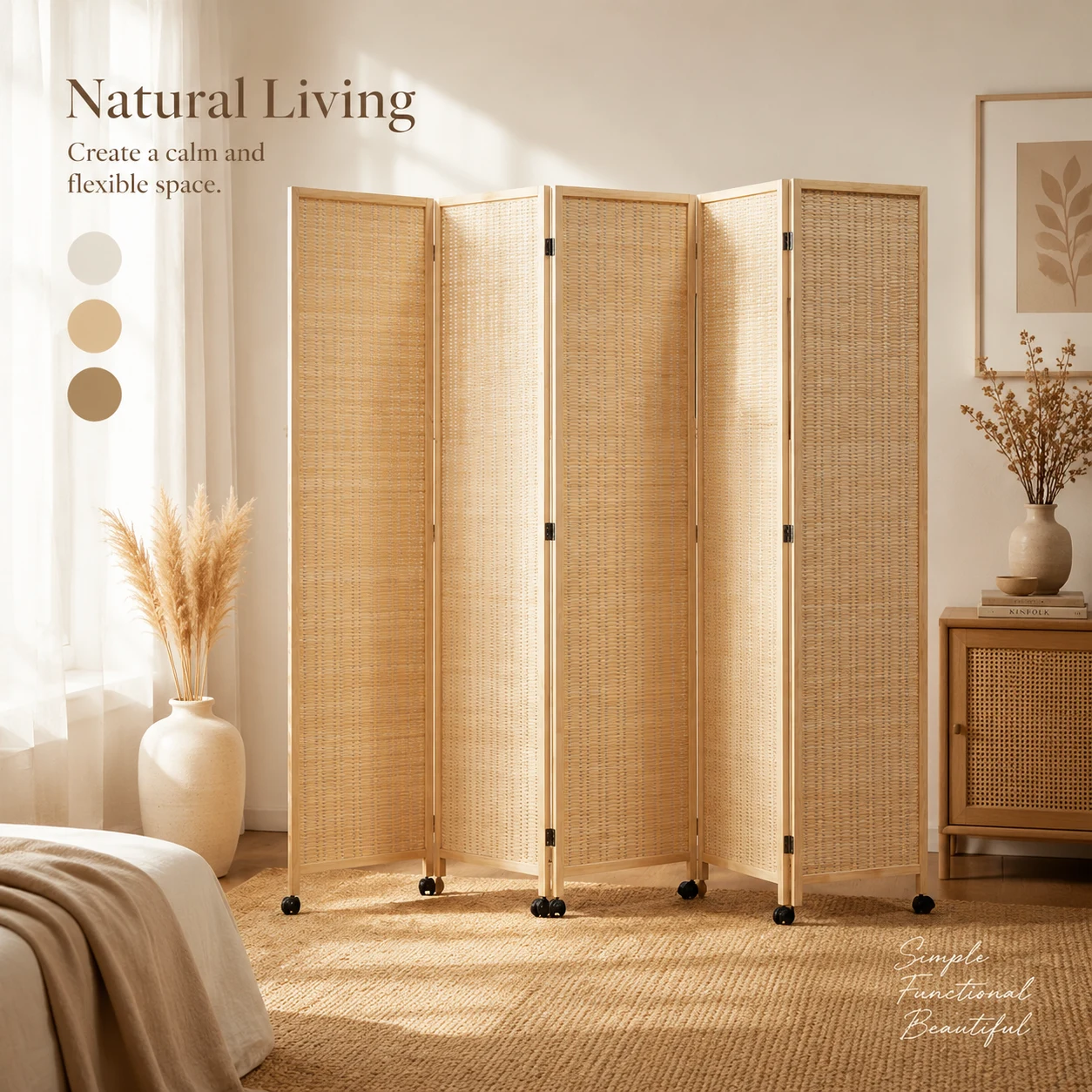
Option 1 — the tall bamboo divider. Five woven bamboo panels, 70.9″ (180 cm) tall, on a solid pine frame with lockable wheels. Built to actually divide a room: screen off a sleeping area, hide a home office, create privacy.
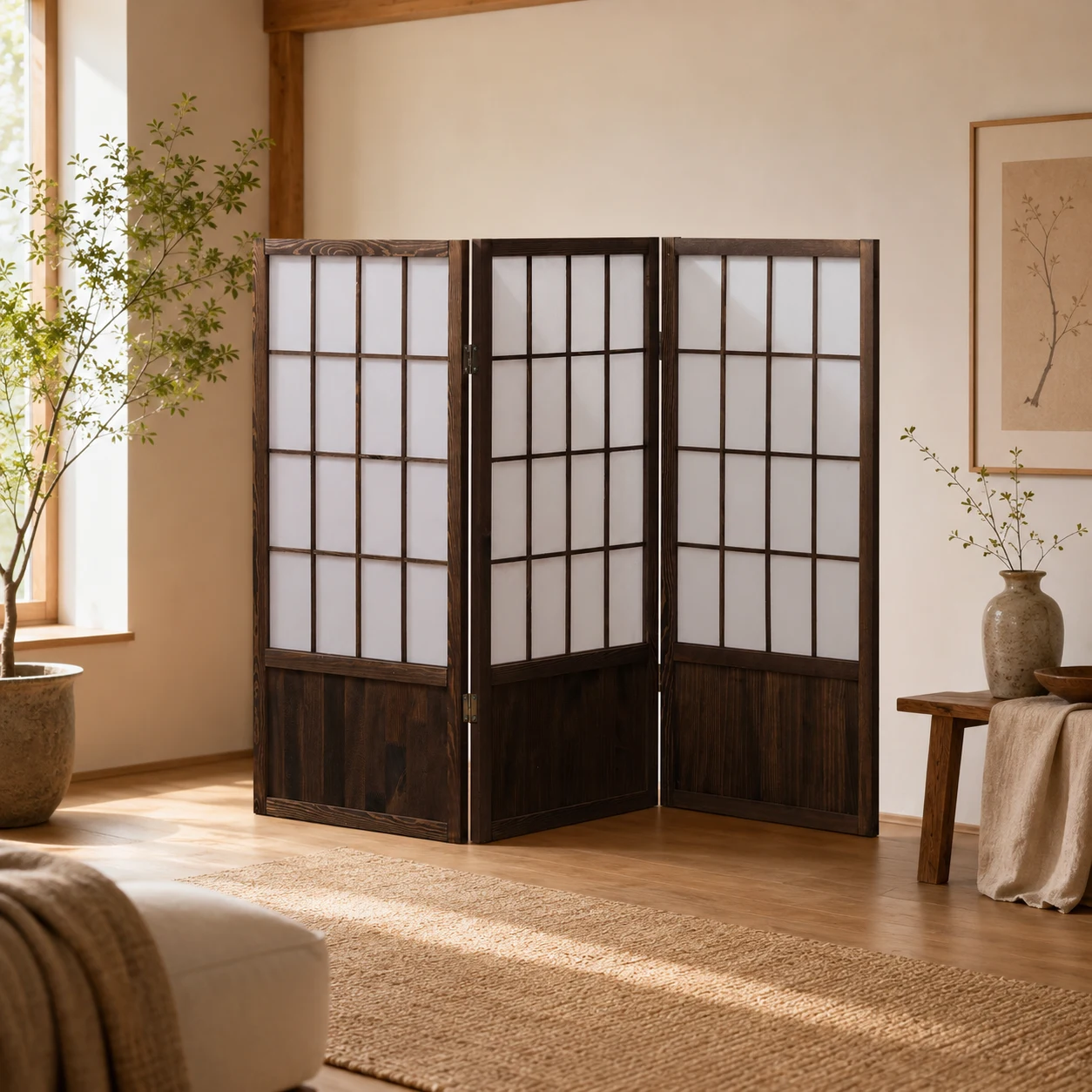
Option 2 — the low shoji screen. Three grid-pattern panels with translucent inserts, 35.4″ (90 cm) tall, solid pine in a vintage dark finish. Less a wall, more a beautiful accent that shapes a corner of a room.
🛒 Japanese Shoji Screen Room Divider, 3-Panel Low Folding Screen
Side by side
| Bamboo 5-Panel | Shoji 3-Panel | |
|---|---|---|
| Height | 70.9″ (180 cm) — eye-level privacy | 35.4″ (90 cm) — low accent |
| Panels | 5 | 3 |
| Main job | Dividing space, privacy | Decorating, styling a zone |
| Light | Filters softly through the weave | Glows through translucent panels |
| Look | Natural, airy, Japandi/boho | Classic Japanese, vintage |
| Mobility | Caster wheels, roll anywhere | Light enough to carry one-handed |
| Best for | Studio apartments, shared rooms, home offices | Plant corners, altar tables, radiator screens, photo backdrops |
Choose the bamboo divider if…
- You need real privacy — separating a bed, a desk, or a changing area in a studio apartment or shared space.
- You want coverage you can move daily: the wheels make it the more practical portable room divider of the two.
- Your style leans warm and textural — the weave reads relaxed rather than formal.
Choose the shoji screen if…
- You want the look of a Japanese screen without a two-meter wall in your room.
- You’re styling a specific spot: behind plants, beside a low bench, on a tatami platform, or as a backdrop for photos.
- Your space is small and a tall divider would feel heavy — a short room divider keeps sightlines open.
Or use them together
They share the same palette of natural wood and soft light, so they layer well: the bamboo divider to define the zone, the shoji screen to style what’s inside it — a plant, a lamp, a meditation corner.
Quick answers
Which gives more privacy? The bamboo 5-panel — it’s full height and covers a wider span.
Which is easier to move? Both are easy; the bamboo rolls on wheels, the shoji simply lifts with one hand.
Which suits a small room? The shoji, if you only need an accent. The bamboo, if you genuinely need to split the space — angle fewer panels to shrink its footprint.
Do they need assembly? Neither. Both stand freely in a gentle zig-zag, no tools or wall fixing.
