
The Story of the Laughing Buddha
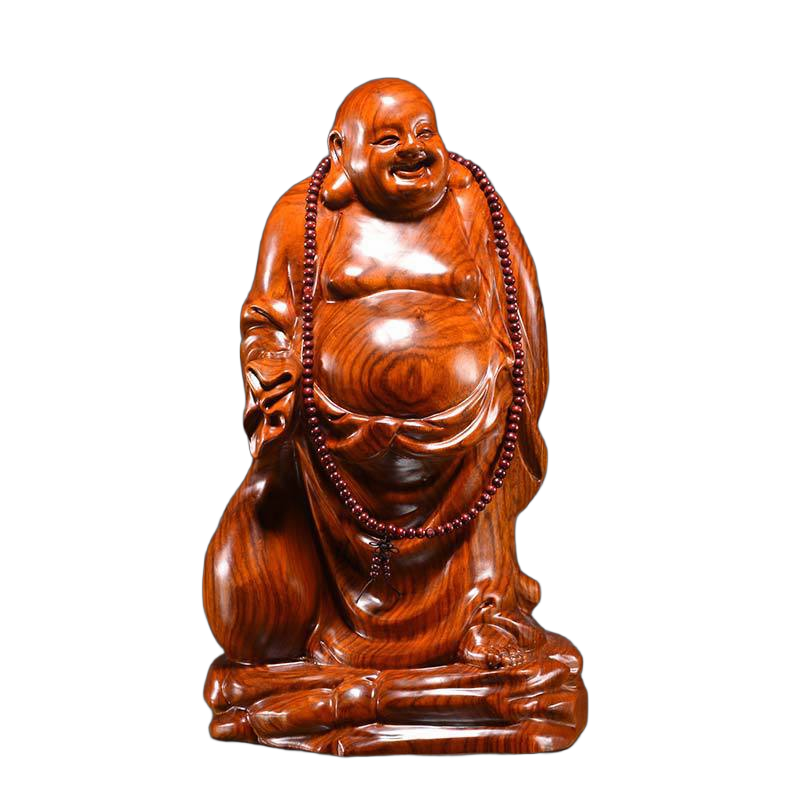
The Laughing Buddha, known as Budai in Chinese folklore, is based on a cheerful and eccentric Zen monk who lived in 10th-century China. He was known for his benevolent nature, often depicted smiling or laughing, with a large belly and a cloth sack. His image is not that of the historical Buddha, Siddhartha Gautama, but rather a revered figure who represents joy, good fortune, and contentment. The sack he carries is said to be filled with precious items, which he shares generously, symbolizing his role in gathering sorrows and bestowing blessings and prosperity.
Detailed Artistry
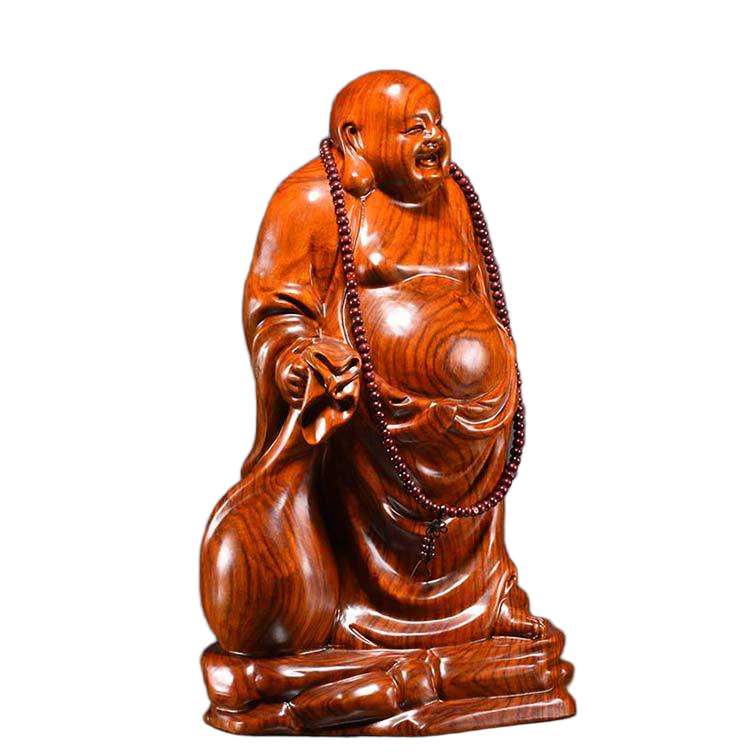
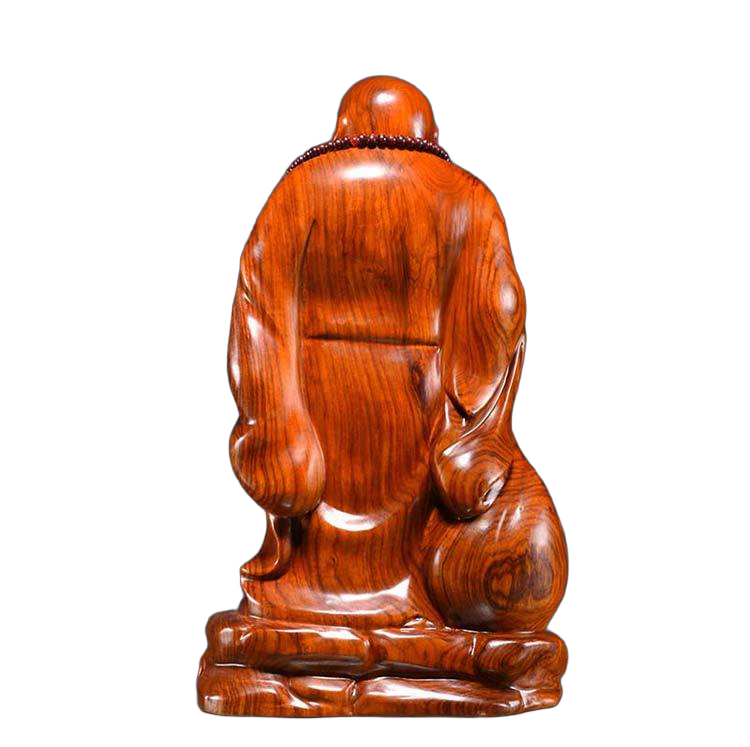
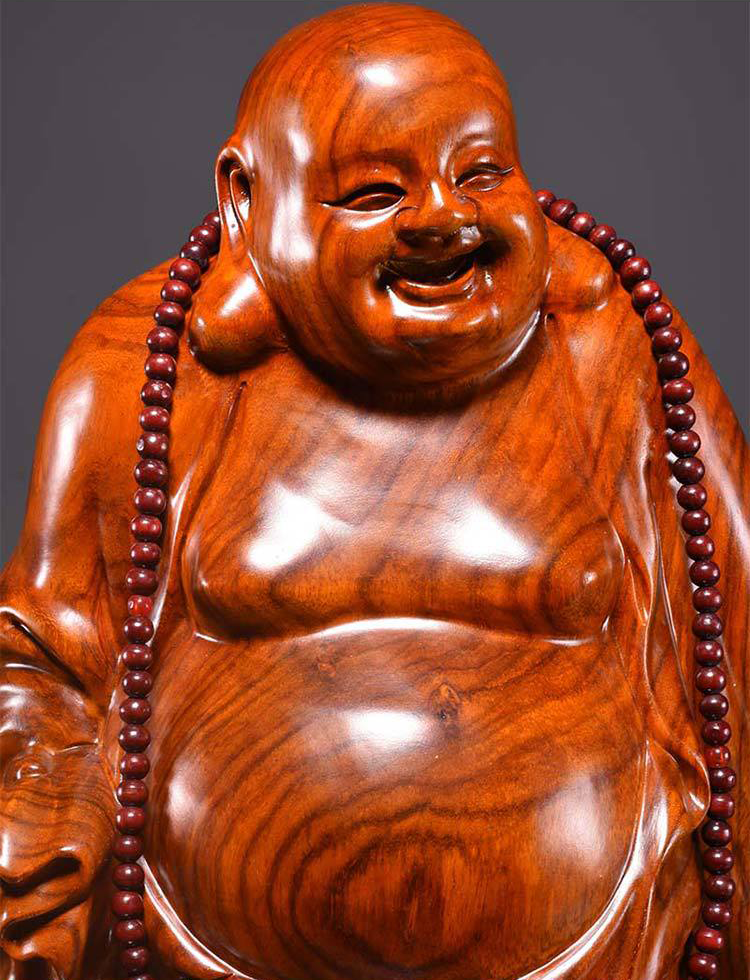
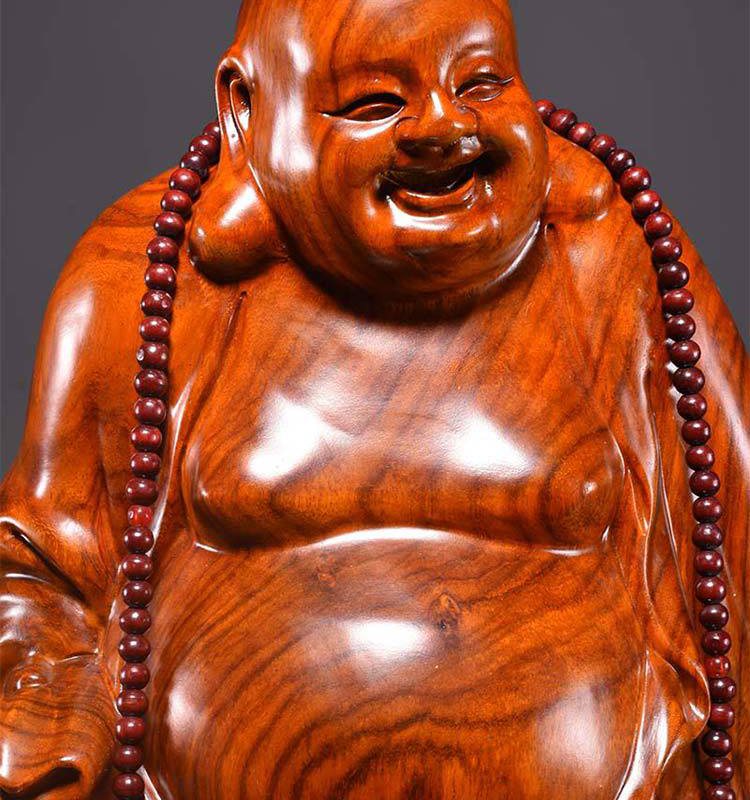
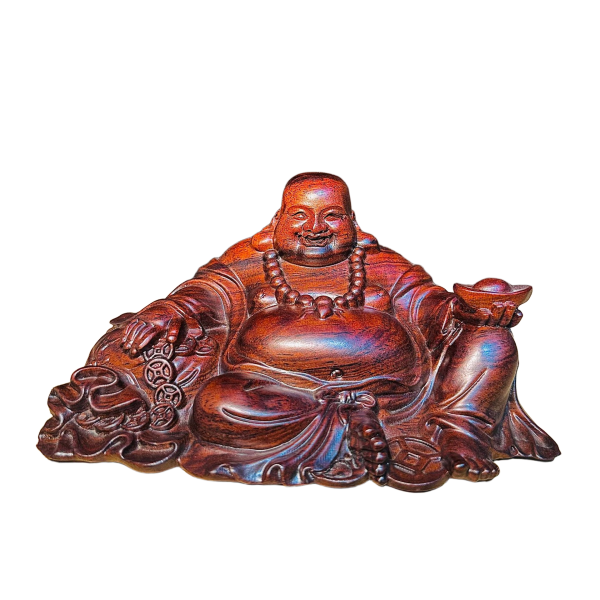
This representation of the Laughing Buddha is carved from Huali wood, a type of pearwood or rosewood highly valued for its beautiful grain and warm, yellowish-brown to reddish-brown hues. The wood’s natural patterns are clearly visible, giving the statue a translucent shimmer and a sense of depth. The carving details the Buddha’s cheerful, smiling face, his large belly which is a symbol of happiness and generosity, and the prayer beads draped around his neck that represent wisdom. Every curve and fold of his robe and the texture of his sack are rendered to create a piece that is both visually appealing and full of character.
Versatile Display Scenarios
This Laughing Buddha statue can be a meaningful addition to various settings:
-
In Your Home: Place it in your living room or entryway to create a welcoming and positive atmosphere. Its presence can serve as a gentle reminder to embrace joy and contentment in daily life.
-
In Your Office: Positioned on a desk or bookshelf, it can help foster a calm and serene environment, reducing stress and promoting a positive outlook during a busy workday.
-
As a Thoughtful Gift: This statue makes a wonderful gift for friends, family, or business associates, conveying wishes of happiness, success, and prosperity.
Reviews
There are no reviews yet.