If you have recently bought a Buddha statue, a Feng Shui piece, or an amulet, you might have stumbled across the Chinese term “Kai Guang.” You are probably wondering: What exactly does this mean? Does it mean my new statue is just an empty piece of decor until a monk blesses it? And more importantly, do I have to do this before putting it in my living room?
Let’s skip the overly mystical jargon and get straight to the point.
When people buy Asian art, especially items deeply tied to religion or traditional beliefs, they often worry about doing something wrong or being disrespectful. “Kai Guang” is one of those concepts that sounds intimidating to Western buyers, but once you understand the practical meaning behind it, it is actually quite straightforward.
Here is everything you need to know about “Kai Guang,” how it works, and how you should treat your new statues and amulets.
What Exactly is “Kai Guang”?
Translated literally from Chinese, “Kai Guang” (开光) means “opening of light.” In traditional Buddhist and Taoist culture, it refers to a consecration ritual performed by qualified monks or spiritual masters.
Think of it this way: a statue is carved from wood, molded from clay, or cast in bronze. At this stage, it is just a beautiful piece of art crafted by human hands. The “Kai Guang” ceremony is essentially an invitation. Through chanting, prayers, and specific rituals—often including symbolically “opening” the eyes of the statue with a brush or a mirror—the practitioner invites the spirit, wisdom, or energy of that specific deity (like the Buddha, Guan Yin, or a Feng Shui wealth god) to reside within the physical object.
Once the “Kai Guang” ritual is complete, the statue is no longer considered just a piece of art or home decor. For a believer, it is now a sacred vessel that holds spiritual energy, and it must be treated with a high level of religious reverence. It becomes a focal point for daily worship, offerings, and meditation.
Do You Really Need to Bless Your Buddha Statue?
The short answer is: No, absolutely not.
Whether you need to seek out a consecration ritual entirely depends on why you bought the statue in the first place.
If you bought a Buddha statue because you appreciate the craftsmanship, you love Asian art, or you simply want to create a calm, Zen-like atmosphere in your home or garden, you do not need to worry about “Kai Guang.” The statue will function perfectly as a beautiful, grounding piece of decor. It will not bring you bad luck just because it hasn’t been officially blessed by a monk.
In fact, even from a strict Buddhist perspective, the Buddha does not “need” us to open his eyes. Many modern Buddhist teachers are very grounded about this. They often say that the true purpose of a Buddha statue is to remind you of your own inner peace and mindfulness. The statue is a mirror for your own mind. When you look at a serene Buddha face and feel your stress melt away, the statue has already done its job. You don’t need a formal ceremony for that.
If you are currently looking to add a peaceful vibe to your home or office without the pressure of religious commitments, you can check out our dedicated Buddha Statues Collection to find a high-quality piece that perfectly fits your space.
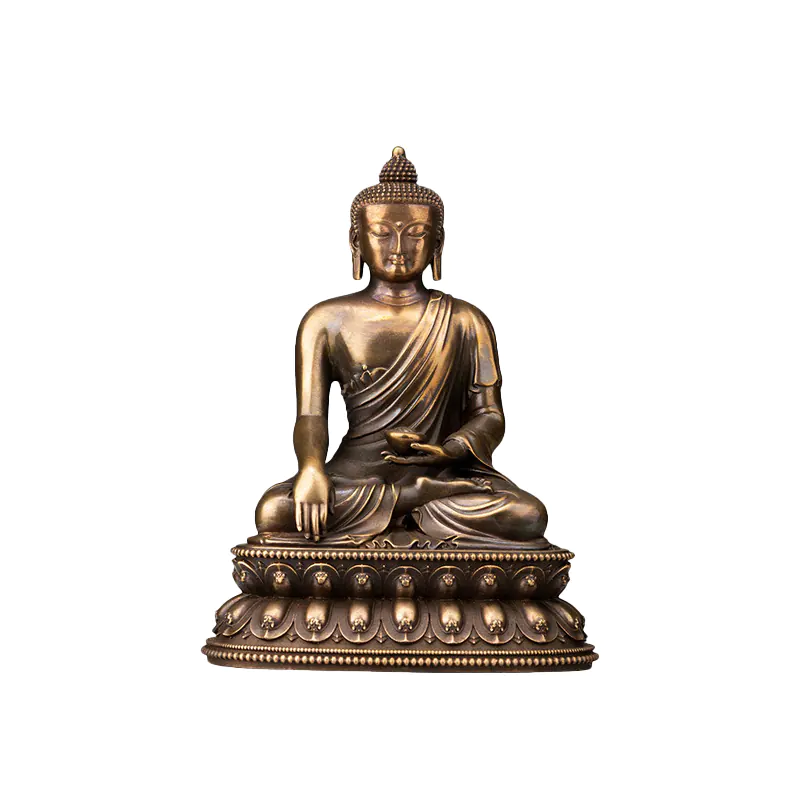
Finely Cast Pure Copper Shakyamuni Buddha Statue | 3cm Miniature for Desk, or Mindful Decor
-
Exquisite Detailing: Precision-cast from pure copper, capturing the Buddha’s serene expression, intricate robes, and the delicate petals of the lotus base.
-
Antique-Style Finish: The warm, bronze-like patina gives the statue a timeless, classic feel, adding a touch of tranquility and elegance to any space.
-
Compact & Personal: At a miniature 3cm (approx. 1.2 inches) height, it’s perfectly sized for a personal meditation space, office desk, bookshelf, or even as a travel companion for mindfulness on the go.
-
Symbol of Peace: Depicts Shakyamuni Buddha in a meditative pose, inviting a sense of calm, focus, and inner peace into your daily life.
-
A Thoughtful Gift: An ideal and meaningful gift for yoga enthusiasts, meditation practitioners, or anyone seeking a beautiful symbol of serenity and enlightenment.
On the other hand, if you are a practicing Buddhist setting up a formal altar for daily prayers, or if you are deeply invested in traditional Feng Shui and want a specific statue to actively change the energy of your home, then you might want to consider having the piece consecrated. But for 90% of people buying these items for aesthetic or mild spiritual reasons, an unblessed statue is perfectly fine.
Decor vs. Devotion: How to Treat Your Unblessed Statue
Just because your Buddha statue or Feng Shui item hasn’t gone through a “Kai Guang” ceremony doesn’t mean you should treat it like a random toy. In Asian culture, symbols carry weight. Treating these items with basic respect is always recommended, whether they are consecrated or not.
Here are a few grounded, practical rules of thumb for placing your new statue:
1. Keep It Elevated
Avoid putting your Buddha statue directly on the floor. It is generally seen as disrespectful. Try to place it on a table, a shelf, or a dedicated stand. A good rule of thumb is to keep it at eye level or higher.
2. Avoid the Bathroom or Kitchen
No matter how nice that Buddha head looks next to your bathtub, it’s a big cultural faux pas. Bathrooms are considered places of unclean energy, and kitchens are places of killing (preparing meat) and chaotic fire energy. Keep your statues in the living room, study, or hallway.
3. Face the Door
If you are placing a Feng Shui statue or a Buddha in your living room, it is generally good practice to have it facing the main entrance. This doesn’t mean it has to be directly in front of the door, but it should be positioned so that it “welcomes” energy entering the house.
4. Keep It Clean
This sounds like common sense, but dust gathers quickly. Wiping down your statue regularly shows respect for what it represents. You don’t need special holy water; a clean, damp cloth will do the job perfectly.
What About Feng Shui Statues and Amulets?
At Asian Artsy, we don’t just sell Buddha statues. Many of our customers buy Feng Shui statues (like the Pixiu, Money Toad, or Guan Gong) and wearable amulets. Do these need “Kai Guang”?
The rules here are slightly different but follow the same practical logic. Feng Shui items are specifically designed to attract wealth, ward off bad luck, or protect the wearer. Many traditionalists believe that for a Feng Shui beast like the Pixiu to actively hunt for wealth for its owner, it must have its eyes opened through “Kai Guang.” Otherwise, it’s just a nice brass decoration.
If you buy an amulet for protection or a Feng Shui statue for wealth, and you want it to “work” in the traditional sense, consecration is preferred. However, many people find that just having the symbol around helps them focus on their goals. If a Money Toad on your desk reminds you to hustle harder and save money, it’s working—with or without a monk’s blessing.
Can You Do “Kai Guang” Yourself?
Let’s be real: finding a legitimate Buddhist temple with monks available to bless your online purchase isn’t easy for most people living in the US or Europe.
While a traditional “Kai Guang” requires an ordained monk or a Taoist priest, many people do their own simple “cleansing” or “welcoming” rituals at home. This is a great, grounded way to connect with your new piece without pretending to be a spiritual master.
When your package from Asian Artsy arrives, you can simply unbox the statue, wash it gently with clean water (if the material allows), and let it sit in the morning sunlight for a few hours. Some people like to light a stick of incense or burn a bit of sage around the item to clear any stagnant energy from its time in transit. You can then place it in its permanent spot with a clear, positive intention. It’s not an official “Kai Guang,” but it is a meaningful way to welcome the art into your life.
FAQ: Common Questions About “Kai Guang” and Statue Care
1. How do I know if a statue I bought online is already “Kai Guang”?
Unless a shop specifically provides a legitimate certificate from a temple, or explicitly states that a monk has blessed the batch, you should assume the statue is not consecrated. Most statues sold online, including those at Asian Artsy, are shipped as brand-new, unblessed art pieces. This is actually a good thing, as it gives you a clean slate to use the item for decor or to arrange your own blessing.
2. Is it bad luck to buy or display an unblessed Buddha statue?
Not at all. This is a common misconception. A Buddha statue is a symbol of peace, compassion, and mindfulness. It will never bring you bad luck. The idea of bad luck usually stems from people placing the statue in deeply disrespectful places (like the bathroom floor). As long as you treat it with basic respect, an unblessed statue brings nothing but positive, calming vibes to your home.
3. Does “Kai Guang” wear off over time?
In traditional belief, yes, it can. If a consecrated statue is neglected, placed in a dirty environment, or physically damaged, the spiritual energy is said to leave the vessel. Some traditional practitioners also believe that amulets absorb negative energy on behalf of the wearer and may need to be “re-blessed” or cleansed once a year at a temple.
4. Can I wear a Feng Shui amulet just for fashion without blessing it?
Absolutely. Many people love the aesthetic of Asian amulets—like jade pendants, obsidian beads, or brass charms. If you are wearing it purely because you like the design and the cultural history behind it, you don’t need to worry about rituals. Just enjoy it as a unique piece of jewelry.
5. I accidentally dropped and chipped my Buddha statue. What should I do?
If it is just an unblessed decor piece, you can simply glue it back together. If you feel it looks too damaged to display, you can throw it away respectfully (some people prefer to wrap it in red paper or cloth before disposing of it). If the statue was consecrated, tradition dictates that you shouldn’t just toss it in the trash. It should be taken to a temple to be formally retired, or buried in nature, as it is believed the spirit has already left the broken vessel.
