
Yeah, it’s a fair question.
You walk into a shop or scroll online and see a small bronze Buddha—hands resting, eyes half-closed—and something about it stops you. Not because you’re looking for a religious symbol. You don’t meditate daily or know the Four Noble Truths by heart. You just feel calmer looking at it, like it’s holding a kind of quiet you wish your own mind would borrow sometimes.
But then the doubt creeps in: Is this okay? Am I taking something that isn’t mine?
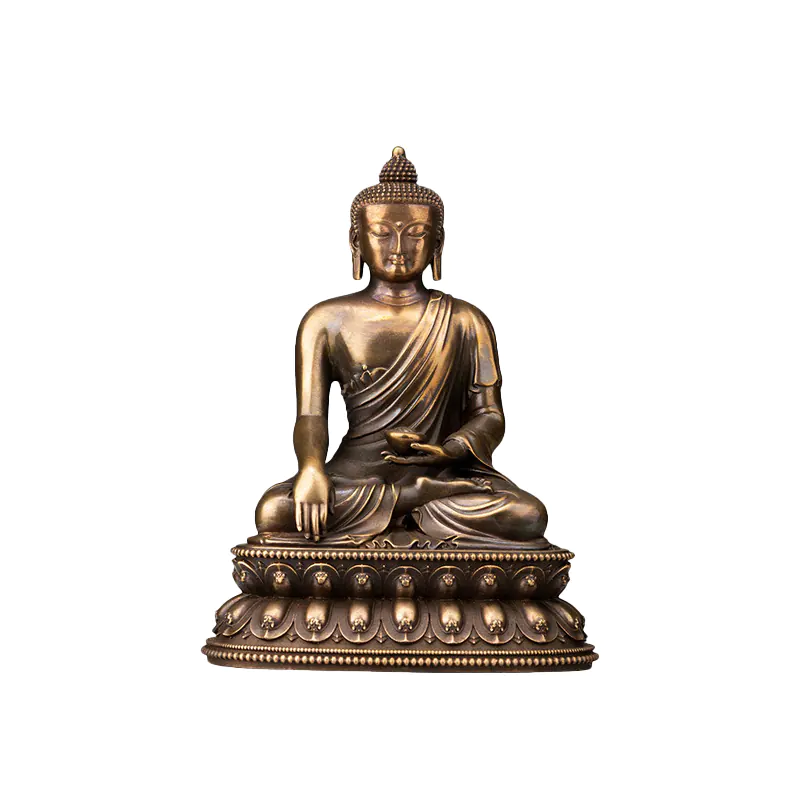
Finely Cast Pure Copper Shakyamuni Buddha Statue | 3cm Miniature for Desk, or Mindful Decor
-
Exquisite Detailing: Precision-cast from pure copper, capturing the Buddha’s serene expression, intricate robes, and the delicate petals of the lotus base.
-
Antique-Style Finish: The warm, bronze-like patina gives the statue a timeless, classic feel, adding a touch of tranquility and elegance to any space.
-
Compact & Personal: At a miniature 3cm (approx. 1.2 inches) height, it’s perfectly sized for a personal meditation space, office desk, bookshelf, or even as a travel companion for mindfulness on the go.
-
Symbol of Peace: Depicts Shakyamuni Buddha in a meditative pose, inviting a sense of calm, focus, and inner peace into your daily life.
-
A Thoughtful Gift: An ideal and meaningful gift for yoga enthusiasts, meditation practitioners, or anyone seeking a beautiful symbol of serenity and enlightenment.
The truth is, most people who keep a Buddha statue at home aren’t monks. Many aren’t even Buddhist. They’re nurses, writers, students, retirees—people who find a kind of stillness in that image, even if they don’t follow the path. And that’s not automatically disrespectful.
What matters isn’t your label. It’s how you hold the object in your space—and in your mind.
In the Buddhist view, the Buddha wasn’t a god. He was a human being who woke up to the nature of suffering and freedom. The statue isn’t meant to be prayed to for favors. It’s a mirror. A reminder that clarity, kindness, and peace aren’t reserved for saints—they’re possible for anyone.
So if you bring one into your home, it helps to remember it carries that weight, even if you don’t use it in a ritual way. You don’t need to light incense or chant. But you might think twice before putting it in the bathroom, where the air is heavy with steam and the purpose is anything but reverence. Or placing it on the floor beneath a coat rack, where it gets brushed by shoes. Not because bad things will happen—most Buddhists don’t believe in that kind of punishment—but because it misses the point. It turns a symbol of awakening into background noise.
A shelf in the living room, a corner of your desk, a windowsill where morning light hits it gently—these are places where the statue can do what it’s meant to do: invite a pause. A breath. A moment of remembering that you, too, can be still.
And honestly, many Buddhist teachers would say that’s more aligned with the spirit of the Dharma than having a grand altar you never actually sit with.
You don’t have to convert. You don’t have to believe in rebirth or karma. You just need to treat the image with a basic kind of care—the same way you might handle a photo of someone you deeply admire. Not out of fear, but out of respect for what it stands for.
Think of it like this: if you hung a portrait of a great peacemaker or poet in your home, you probably wouldn’t stick it behind the laundry basket or use it as a coaster. Not because the paper is sacred, but because the person it represents stood for something worth honoring. The same logic applies here.
So yes—it’s okay to have a Buddha statue if you’re not Buddhist.
Just let it be more than a decoration.
Let it be a quiet companion in a noisy world.
And if it helps you sit a little taller, breathe a little slower, or choose kindness on a hard day?
Then you’re already closer to the heart of what that image has always been about.
