In Eastern philosophy, there is a famous proverb that states: Yi Nian Cheng Fo, Yi Nian Cheng Mo. Translated directly, it means “One thought to become Buddha, one thought to become a demon.”
Western storytelling often frames good and evil as two entirely separate, external forces constantly at war with one another. Eastern thought approaches this completely differently by turning the lens inward. The Buddha and the Demon are not cosmic entities fighting over the fate of the world in the sky; they are two sides of the exact same coin, residing quietly within the human mind. The transition between the two does not take years of moral decay or spiritual practice—it happens in a single, split-second thought.
This raw concept of duality drives some of the most striking and misunderstood pieces in Asian art. Understanding this tension changes how we view these artworks. They stop being mere exotic decor and become highly functional tools for psychological reflection and inner balance.
The Thin Line Between Serenity and Chaos
To grasp the meaning of this art, we have to look at what the “Buddha” and the “Demon” actually represent in this specific cultural context.
The Buddha side does not simply mean “being a good person.” It represents clarity, ultimate peace, mindfulness, and the ability to let go of obsessive attachments. It is the state of mind where ego steps aside, allowing you to see situations clearly without reacting out of anger or greed.
The Demon—often associated with the Buddhist concept of Mara—is not equivalent to the Western idea of a pitchfork-wielding devil. Instead, the demon represents unchecked human desires, ego, obsession, jealousy, and blind rage. The demon is the chaotic noise in our heads that tells us we are wronged, that we need more, or that we must lash out.
The philosophy of “one thought” highlights how fragile our state of mind is. You can be meditating, feeling completely aligned with the world, and in the next second, someone insults you. In that exact fraction of a second, your mind makes a choice. You can observe the insult and let it pass (the thought of the Buddha), or you can let your ego take over and explode with anger (the thought of the demon). There is no permanent state of grace. It is a daily, moment-to-moment management of human nature.
Translating Invisible Philosophy into Tangible Art
For centuries, artists have faced a unique challenge: how do you carve a passing thought out of wood, stone, or metal?
The answer lies in the striking half-Buddha, half-demon imagery. At Asian Artsy, we focus heavily on bringing these profound philosophical concepts to Western audiences through physical mediums. We see a significant shift in collectors wanting Asian art pieces that mean something deeply personal, rather than just looking beautiful. The Buddha and Demon statues and amulets in our collection serve as the perfect tangible artistic representation of this inner duality.
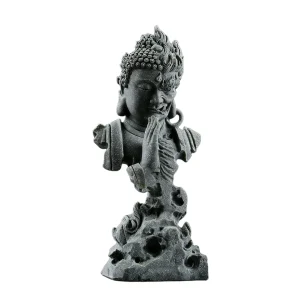
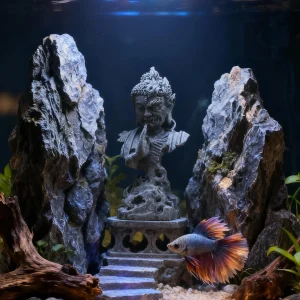
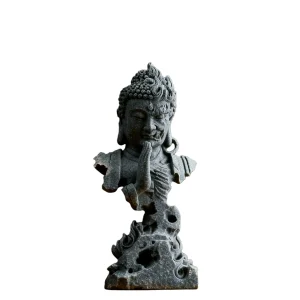
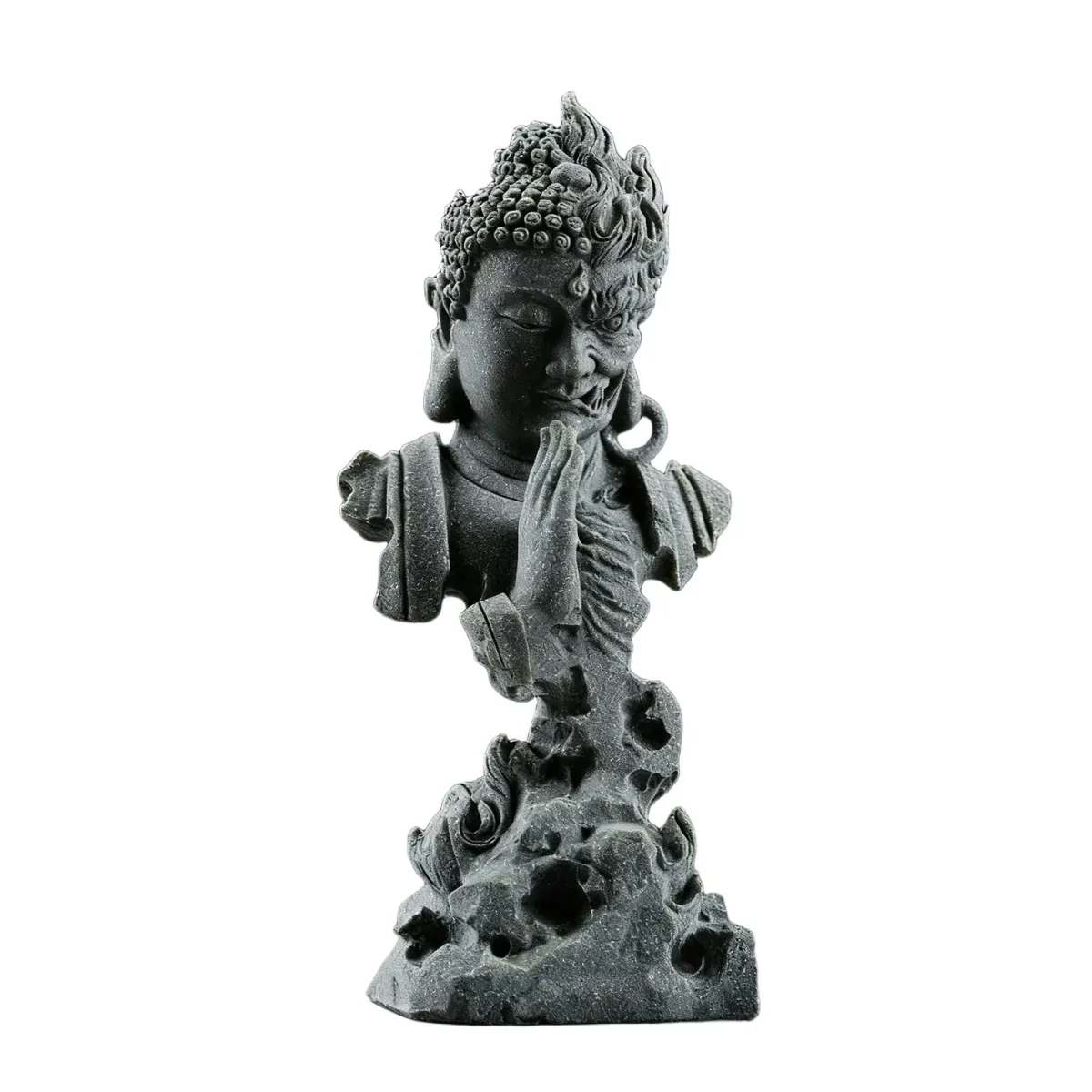
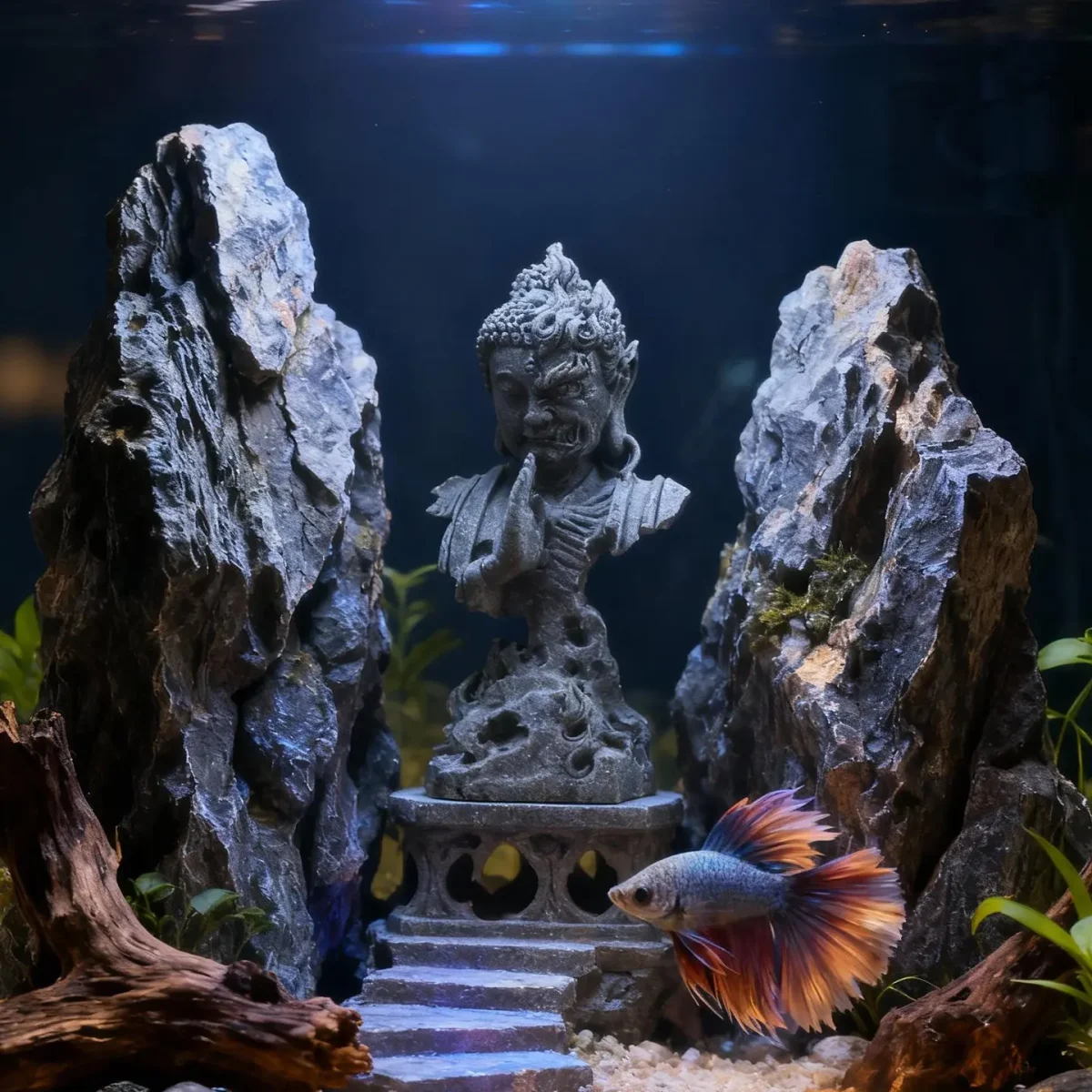
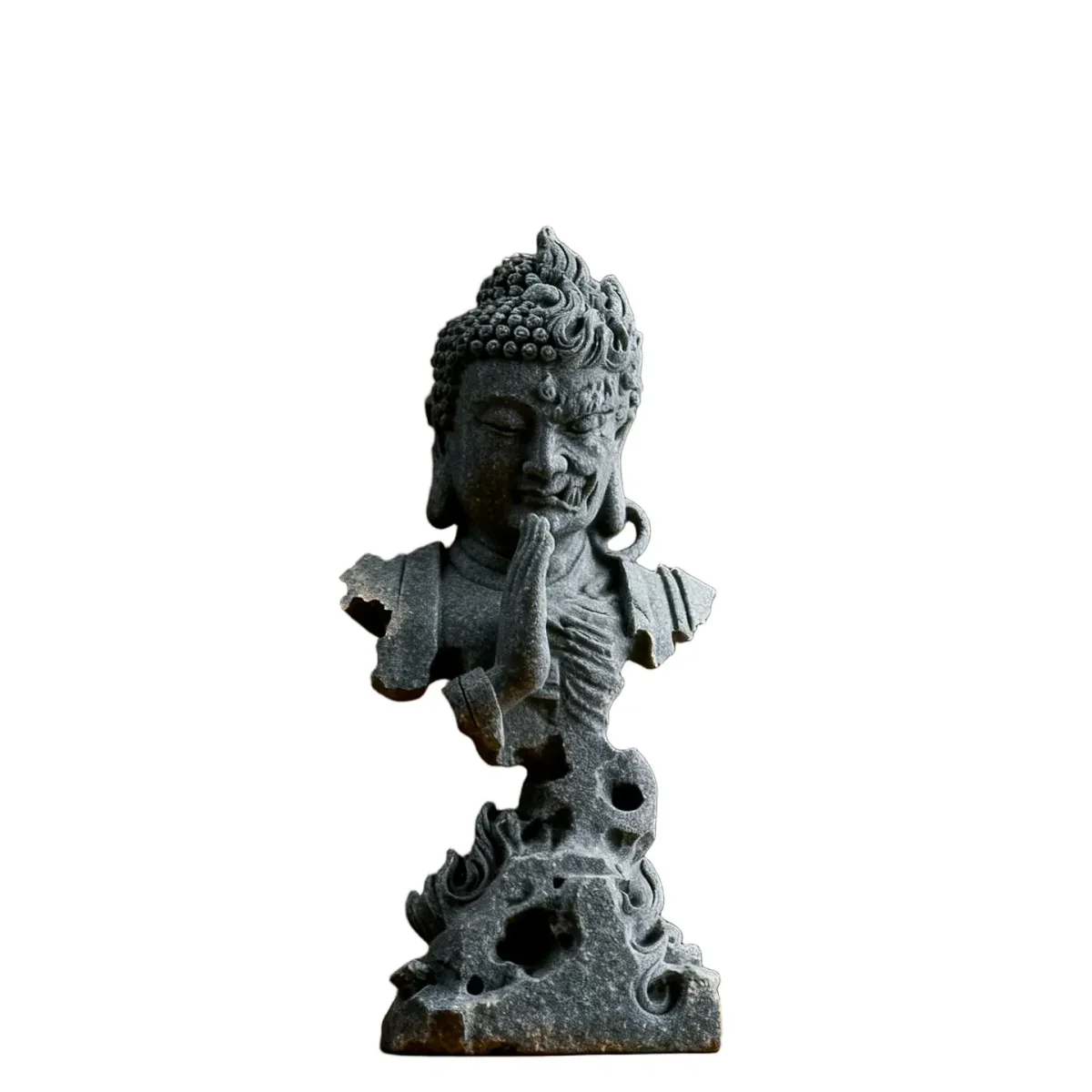
Dual-Faced Buddha and Demon Zen Art Sculpture
-
Approximate Dimensions: Measures about 15.5 cm (6.1 inches) in height and 7.3 cm (2.8 inches) in width, making it a perfectly sized accent piece.
-
Unique Material Blend: Crafted from a high-quality mix of bluestone sand and durable resin, providing a beautiful, natural stone-like texture.
-
Profound Symbolism: Features an intricate split-face design that visually represents the philosophical balance between serenity and inner turmoil.
Take a close look at our signature split-face bust statue. The visual contrast is jarring by design. Crafted with a dark, textured stone-like finish, the figure seems to rise organically out of a jagged, porous base that resembles shifting smoke or raw, eroding earth. Down the exact center of the face, the sculpture splits. One half features the smooth, unbothered features of an awakened mind—a peaceful half-closed eye and traditional curled hair. The other half is pure aggressive energy, featuring wild, flame-like hair, a bulging, intense eye, and a contorted mouth revealing a sharp fang.
The most powerful detail, however, is found right in the center of the chest. The hands are brought together in a traditional prayer pose. But while the hand on the Buddha side is smooth and calm, the hand on the demon side is skeletal and claw-like. It visually captures the Buddha and the Demon locked in an eternal, quiet negotiation. They share one single head. They share one body.
Having a piece like this on your desk or wearing a duality amulet is not about worshipping dark forces or bringing spooky aesthetics into your home. It acts as a physical, daily anchor. Every time your eyes catch the statue or your hand brushes the amulet, it forces a quick mental check-in. It asks you: Which side is running your mind right now?
Why We Need the Demon in Art
A common reaction from people first encountering this style of Asian art decor is to wonder why the demon is included at all. If the goal is peace, why not just display a traditional, fully serene Buddha statue?
While traditional Buddha statues are beautiful and aspirational, they only show the finish line. A pure Buddha statue represents the ideal state. A Buddha-Demon statue, however, represents the realistic human experience.
Ignoring the darker, chaotic side of human nature does not make it disappear. Psychologists like Carl Jung referred to this as the “Shadow self,” noting that suppressing our dark traits only gives them more power. Eastern philosophy recognized this thousands of years earlier. The demon side represents our survival instincts, our drive, and our raw ambition. These are not inherently useless traits; they only become destructive when they operate without the mindful supervision of the “Buddha” side.
The art tells us that the goal is not to kill the demon. You cannot kill a part of yourself. The goal is to recognize it, accept that it lives inside you, and actively choose not to let it steer the wheel. The art normalizes our flaws.
Keeping the Balance
We live in an era of constant external stimulation. We are stressed, overworked, and easily triggered by social media, traffic, and workplace conflicts. The ancient idea of the “one thought” transition is more relevant today than ever.
Surrounding yourself with art that reflects this reality keeps you grounded. The philosophy embedded in these sculptures and amulets cuts through the noise. It reminds us that no matter how chaotic the external world gets, the choice between reacting with the clarity of a Buddha or the chaos of a demon always happens inside our own heads.
Eastern art is ultimately a mirror. The next time you look at a split-face piece, pay attention to which side your eyes naturally gravitate toward. It usually tells you exactly where your mindset currently is, and where it needs to be.
