
The human brain processes thousands of thoughts a minute, and sitting still with closed eyes often turns up the volume on that internal noise. For many practitioners, shutting out the world entirely does not bring peace; it brings a flood of anxiety, to-do lists, and restless energy. This is exactly where a visual meditation focus object comes into play. Rather than forcing the mind to empty itself into a dark void, a physical anchor gives your active brain a specific, tangible place to rest.
In the realm of mindfulness, staring at a blank wall or closing your eyes isn’t the only way to practice. Open-eye meditation—often rooted in traditions like Trataka or certain Zen practices—utilizes a focus object to ground the body and mind in the present moment. Choosing the right object for your meditation space is more than a matter of interior design. The item you look at sets the psychological tone for your entire session.
The Mechanics of a Visual Anchor
When people sit down to meditate, the eyes naturally want to dart around. This physical eye movement is closely tied to brain activity. Every time your eyes shift, your brain processes new information. By resting your gaze on a single, stationary meditation focus object, you are physically signaling your nervous system to slow down.
A focus object works as a tether. When intrusive thoughts inevitably arise, you do not have to fight them. You simply acknowledge the thought and pull your attention back to the physical details of the object in front of you—the texture, the shadows, the curves. This method is highly effective for beginners and seasoned practitioners alike who struggle with sleepiness or mental drifting during closed-eye sessions.
Moving Past “Good Vibes Only”
A common hurdle in modern Western mindfulness is the expectation of constant serenity. There is a prevailing idea that meditation is about achieving a state of pure, undisturbed bliss. The reality of sitting with your own mind is entirely different. Real mindfulness requires observing everything that comes up: the calm, the anger, the joy, and the frustration.
Attempting to push away negative emotions or stressful thoughts only makes them louder. True balance comes from acknowledging duality. We all possess a quiet, compassionate side, as well as a chaotic, defensive, or anxious side. A useful mindfulness tool should not just remind you to be peaceful; it should remind you to accept yourself entirely, flaws and all.
The Half-Buddha, Half-Demon Statue as a Mindfulness Tool
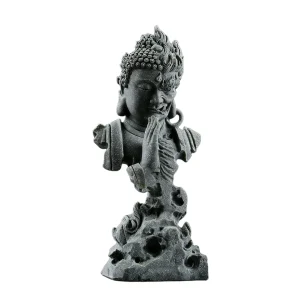
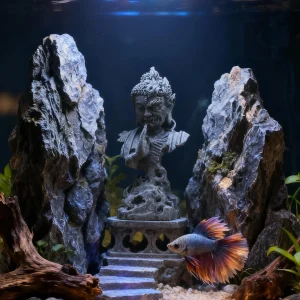
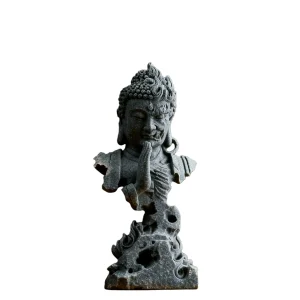
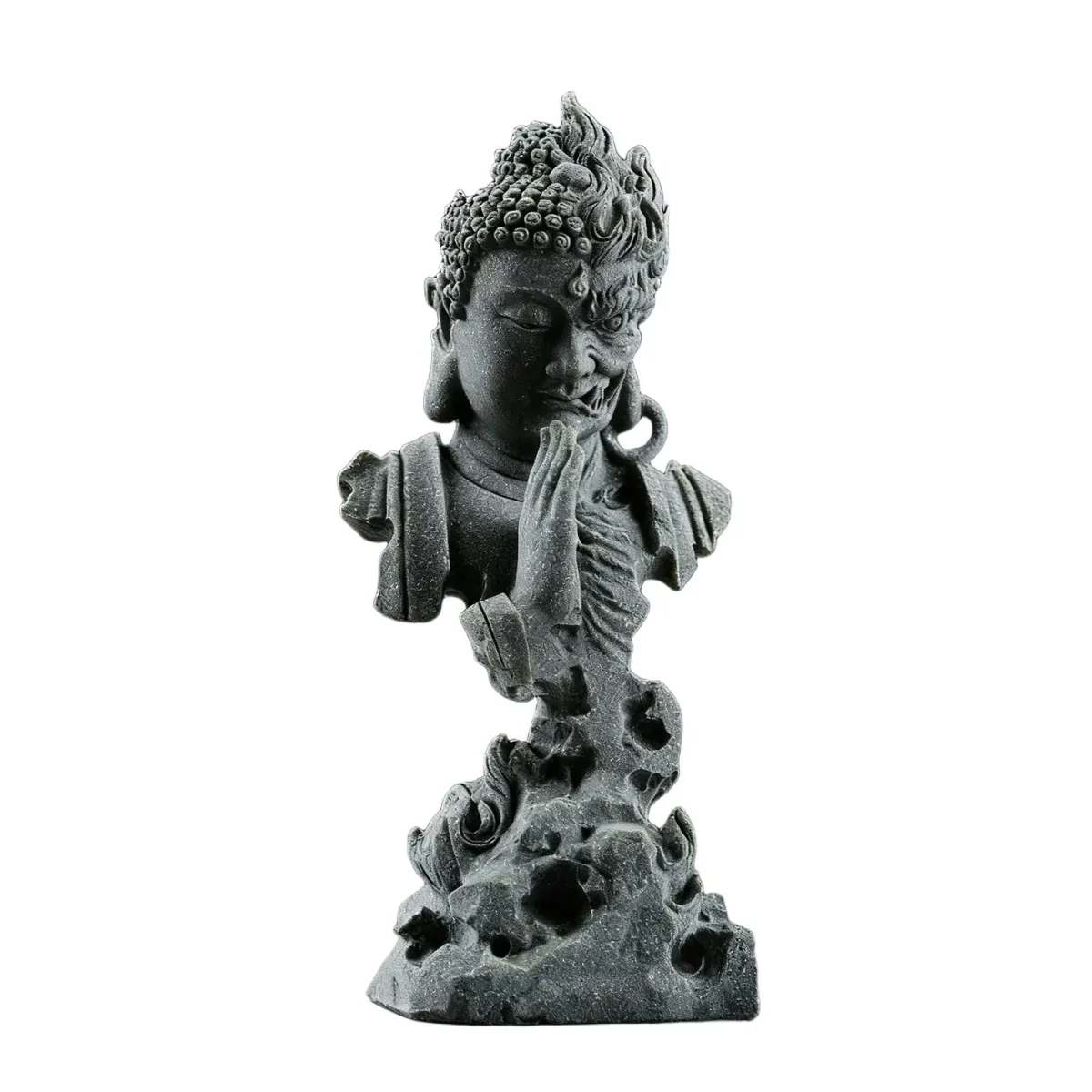
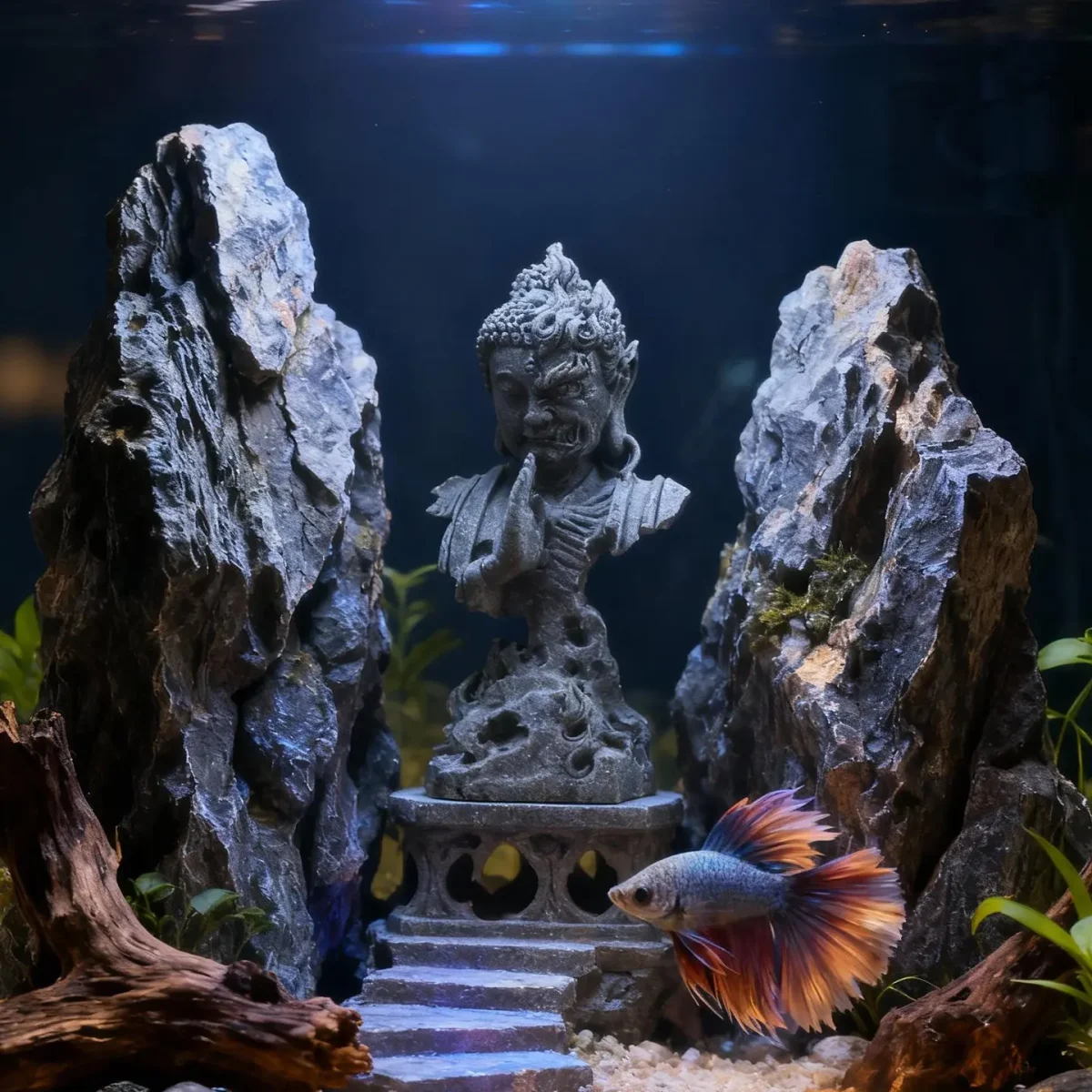
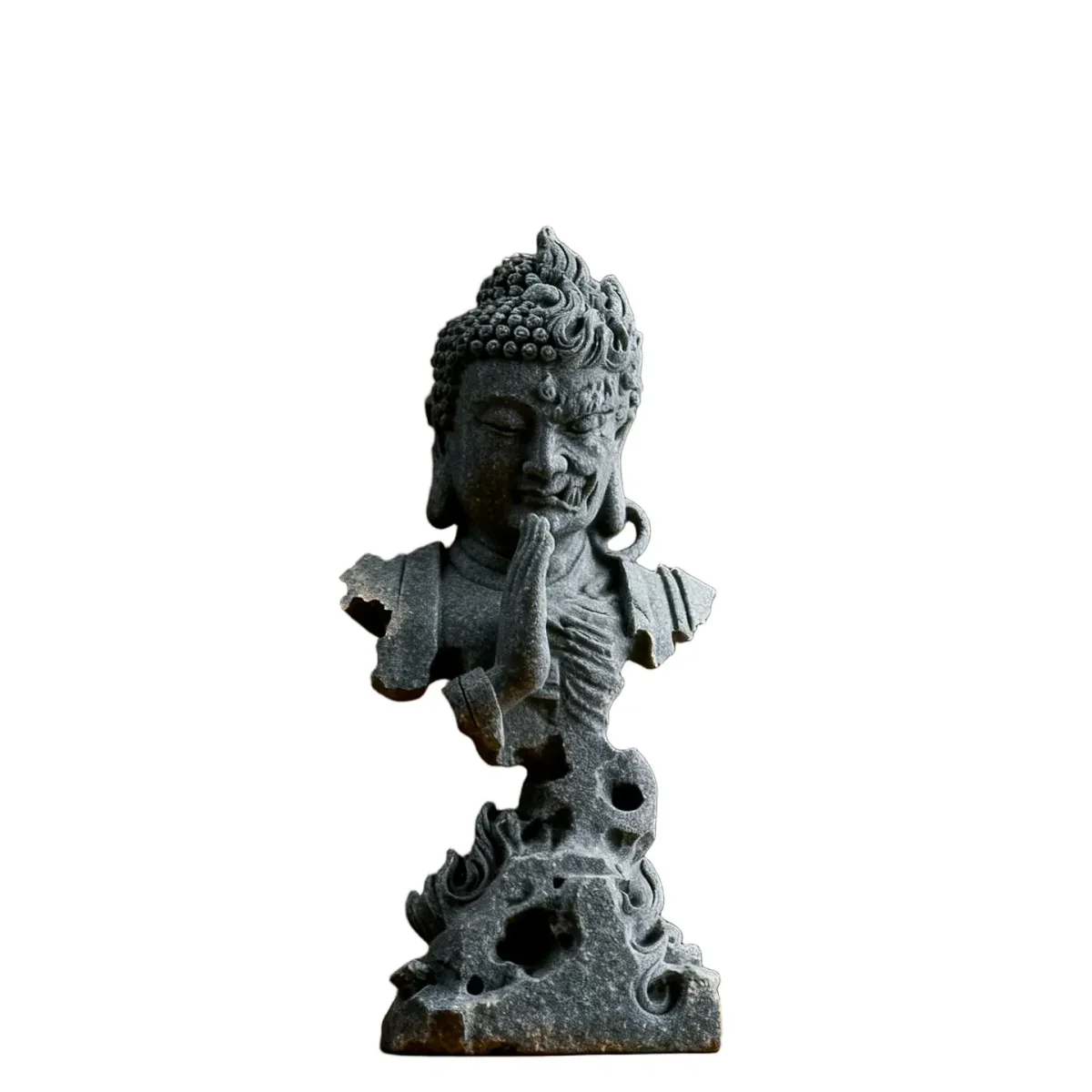
Dual-Faced Buddha and Demon Zen Art Sculpture
-
Approximate Dimensions: Measures about 15.5 cm (6.1 inches) in height and 7.3 cm (2.8 inches) in width, making it a perfectly sized accent piece.
-
Unique Material Blend: Crafted from a high-quality mix of bluestone sand and durable resin, providing a beautiful, natural stone-like texture.
-
Profound Symbolism: Features an intricate split-face design that visually represents the philosophical balance between serenity and inner turmoil.
This is where the dual-faced Buddha and Demon statue becomes an exceptional focal point for a meditation space. At first glance, the piece is a striking work of Asian art. It features a bust emerging from a rugged, porous base that resembles swirling smoke or weathered volcanic rock. But its true value lies in its profound visual symbolism.
The left side of the face depicts a traditional Buddha—eyes gently lowered, expression smooth, radiating absolute tranquility and detachment from worldly suffering. The right side is a stark contrast. It features the face of a fierce, fanged entity. In Buddhist philosophy, this fierce side often represents Mara, the embodiment of ego, distraction, temptation, and the inner obstacles that keep us from clarity. In a broader psychological sense, it represents the “shadow self”—our stress, our anger, and our raw, unpolished human nature.
As a meditation focus object, this dual-faced statue serves a very specific purpose. When you rest your gaze on it, you are not looking at a battle between good and evil. You are looking at coexistence. Notice the hands of the statue. Despite the contrasting faces, the figure’s hands are pressed together in a steady, unified prayer pose (Anjali Mudra). The calm and the chaos are anchored by the exact same center.
Meditating with this statue encourages a shift in perspective. As you breathe and maintain a soft gaze on the figure, it serves as a visual reminder that you do not need to destroy your “demons” to find peace. Your stress, your ego, and your rough edges are part of the whole structure. Balance is found by accepting both halves and letting them sit quietly together.
How to Use the Statue in Your Practice
Integrating this statue into your routine is straightforward. Place the figure on a stable surface in your meditation space, ideally at arm’s length. It should sit slightly below your natural eye line so your neck remains comfortable and your gaze naturally angles downward.
Lighting plays a significant role in how the object grounds you. Allow a soft, natural light or a dim lamp to cast shadows across the porous texture of the stone-like base and the deep lines of the faces.
Settle into your posture, take a few deep breaths, and open your eyes slightly. Do not stare intensely or try to memorize the details. Let your vision blur just a little. You might choose to rest your gaze directly on the line where the two faces meet, or on the clasped hands at the center of the chest. Whenever your mind starts to plan your workday or replay a stressful conversation, use the physical presence of the statue to pull you back. Notice the rough texture of the rocky base, the smooth curve of the Buddha’s earlobe, or the sharp edge of the demon’s fang. Let the visual input anchor you in the present second.
A focus object is not a magic item that will instantly clear your mind. It is a practical tool designed to keep you anchored when your internal world gets loud. By choosing an object that represents the full spectrum of the human experience, you create a meditation practice rooted in reality, acceptance, and genuine balance.
