
Walk into almost any Chinese restaurant from London to San Francisco, or stroll through the garden section of a high-end home goods store, and you’ll meet him. He is undeniable: a bald, rotund figure with a shirt gaping open to reveal a massive stomach, his face frozen in a perpetual, infectious guffaw.
He is the Laughing Buddha.
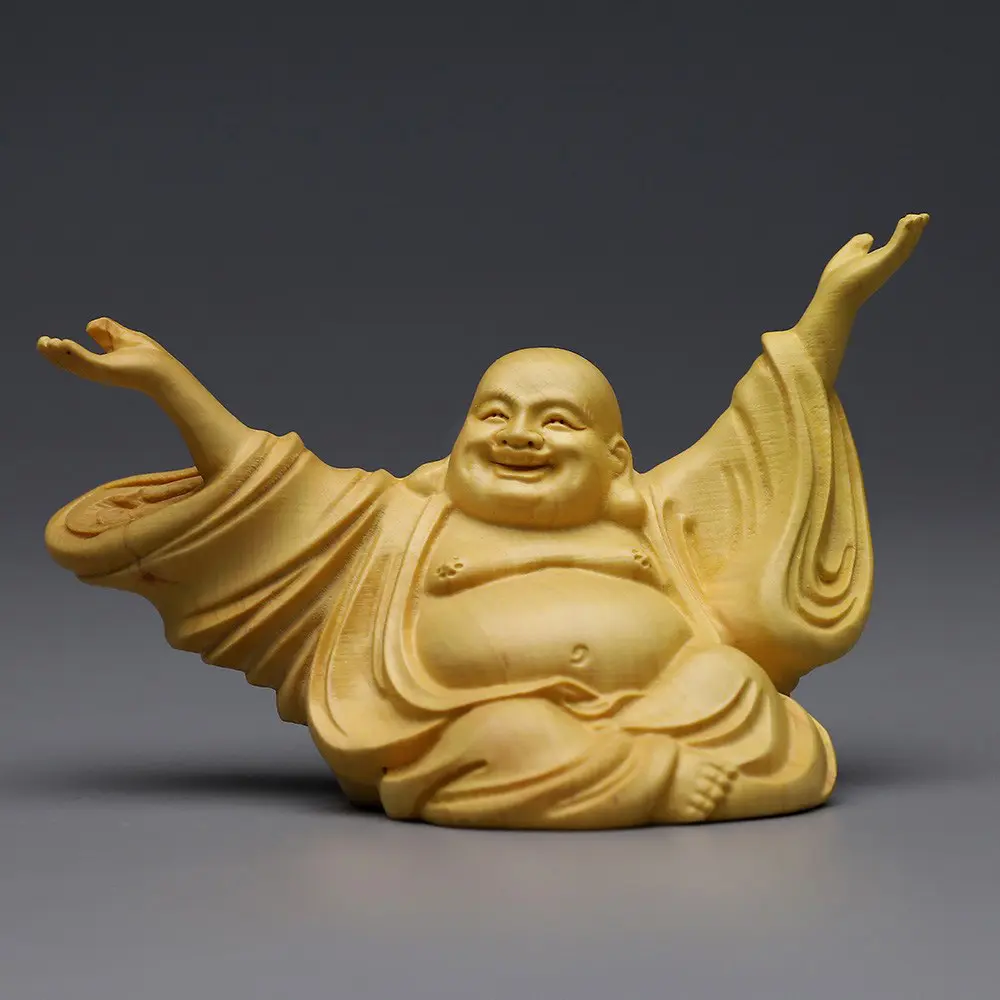
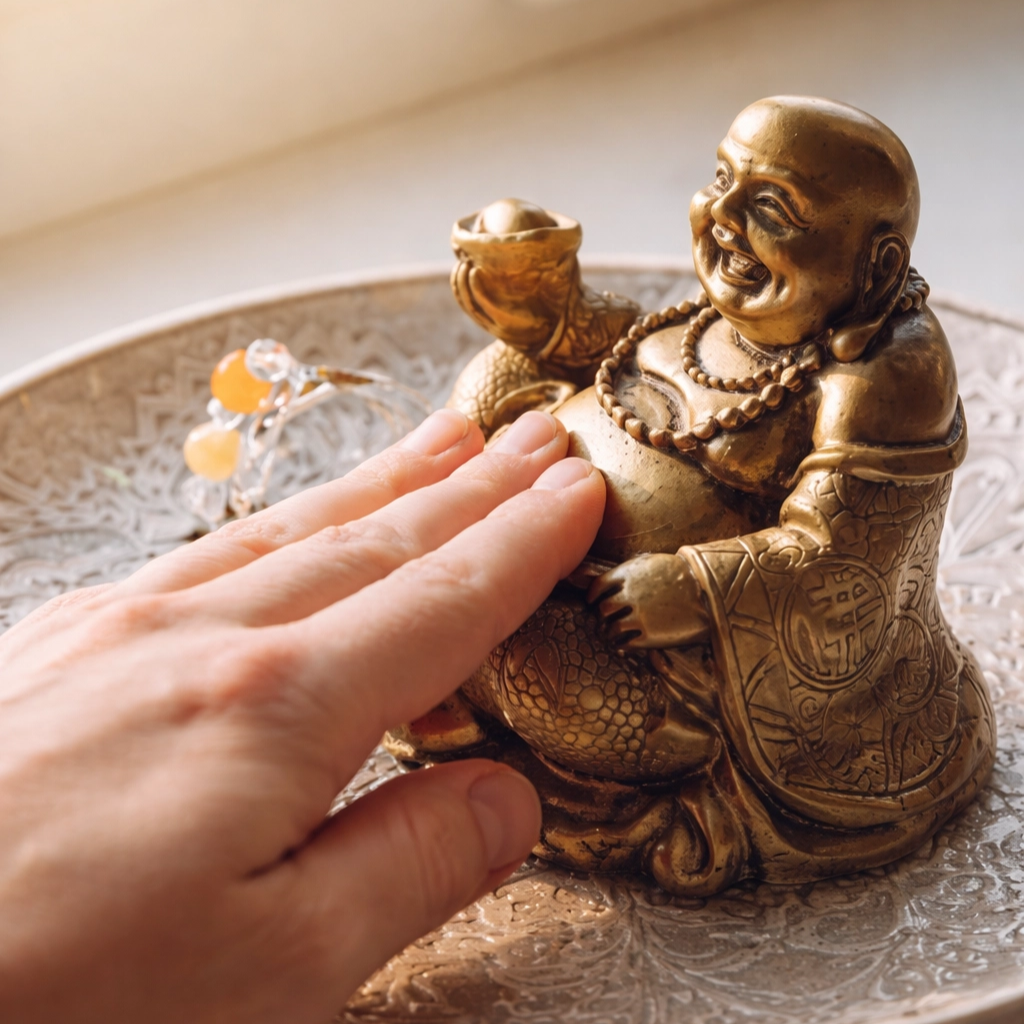
For decades, a specific piece of Western folklore has surrounded this iconic statue: If you rub his belly, he will grant you wealth and good luck.
But is there any cultural merit to this tactile ritual? Or have we simply projected our hopes onto a joyful piece of décor? To understand whether rubbing the Laughing Buddha’s belly really brings good luck, we have to peel back the layers of history, separate the man from the myth, and look at what this icon actually represents.
The Case of Mistaken Identity: Who Is He, Really?
First, let’s clear the air. A surprising number of people confuse the traditional Buddha with the Laughing Buddha. If you visualize the founder of Buddhism, Siddhartha Gautama, you likely picture a slender figure in deep meditation, eyes closed, radiating solemn peace.
The jovial, heavy-set fellow is someone else entirely.
The history of the Laughing Buddha takes us back to 10th-century China, during the Liang Dynasty. He was an eccentric Ch’an (Zen) monk named Budai (or Hotei in Japanese folklore). The name literally translates to “Cloth Sack.”
Who was he in real life? Accounts describe him as a wandering benevolence who carried all his worldly possessions in a simple hemp sack. But here is where the deeper meaning emerges: that sack wasn’t just for luggage. Legend says he would collect sadness and woes from the people he met, stuff them into his sack, and give them candy or toys in return (which is why he is often surrounded by children).
He represents the paradox of abundance: he owned nothing, yet he was the happiest man in the world.
The Anatomy of the Belly Rub
So, why the belly? And does it actually work?
In Chinese physiotherapy and energetic traditions (Qigong), the stomach is the center of Qi (energy). A large belly, in the context of Budai, doesn’t symbolize gluttony; it symbolizes a massive capacity for tolerance and benevolence. He “stomachs” the troubles of the world so you don’t have to.
The act of rubbing a happy Laughing Buddha statue is less about magic and more about psychological anchoring.
- The Ritual of Intention: When you pause to rub the belly of a Laughing Buddha figurine, you are physically interrupting your stress cycle. You are focusing on a wish—wealth, health, or relief.
- The Law of Reciprocity: Folklore suggests Budai loves to laugh. By rubbing his belly, you are playfully “tickling” him or acknowledging his joy. The luck is his gift back to you for acknowledging his happiness.
- Positive Reinforcement: If you place a Laughing Buddha on your desk to attract wealth and you touch it before a business call, you aren’t summoning supernatural cash; you are setting a confident, positive mindset.
So, while a scientist won’t confirm that a Laughing Buddha statue alters probability, a psychologist might tell you that the optimism it triggers certainly improves your odds of success.
Decoding the Prop: What Is He Holding?
Not all statues are created equal. When shopping for a Laughing Buddha statue for your home, you will notice he is rarely empty-handed. What he holds dictates the specific “flavor” of luck he invites.
- The Gold Ingot (Yuan Bao): If he is holding a boat-shaped gold nugget high above his head, this is the ultimate Feng Shui cure for attracting money. It is purely about financial influx.
- The Wu Lou (Gourd): Often hanging from his staff, this hourglass-shaped gourd was used to carry medicine. A statue with this is a talisman for health and longevity.
- The Mala Beads: Even though he looks casual, holding beads reminds us of his spiritual roots. This variation is best for mental clarity and meditation spaces.
- The Sack: If the sack is prominent, the Laughing Buddha symbolizes protection and safe travels.
Material Matters: Wood, Jade, or Gold?
The “vibe” of the statue changes drastically depending on what it is made of. This isn’t just aesthetic; in Feng Shui, the element matters.
If you are looking for a gold-colored Laughing Buddha statue, you are likely focused on business. Metal energy attracts precision and financial gain. These are common in restaurants and offices.
Conversely, a jade Laughing Buddha carries a softer, more protective energy. Jade has been revered in Asia for thousands of years as a stone that purifies energy. A jade statue (or even wearing a jade pendant) is considered a personal bodyguard against negativity.
For a more grounded feel, a wooden Laughing Buddha statue brings the “Wood” element of growth and family vitality. They feel less like an idol and more like a wise, rustic grandfather figure in the room.
Feng Shui: Location is Everything
You bought the statue. You have the intention. But if you put him on the floor, you might be blocking your own luck. The meaning of the Laughing Buddha is tied to respect and visibility. Placing a deity figure on the floor is considered disrespectful in Asian culture.
To maximize its Feng Shui potential:
- The Power Spot: Place him facing the main door (but not directly in line with it). He should be the first thing the Qi (energy) sees when it enters your house, transforming any incoming negativity into joy.
- The Wealth Corner: Stand at your front door looking in. The far left corner of your home is the wealth sector. A suitably large Laughing Buddha statue works wonders here as a focal point.
- The Garden: An outdoor Laughing Buddha statue connects the home with nature. A weather-resistant garden statue nestled among plants suggests that abundance is growing naturally in your life.
Final Thoughts: The Smile is the Secret
So, should you buy a Laughing Buddha statue and start rubbing his belly?
If you approach it with a sense of playfulness, absolutely. Whether it is a tiny figurine on your dashboard or a massive stone statue in your garden, he serves as a constant, visual reminder to lighten up.
Life is heavy. Budai’s message, delivered through that open-mouthed grin, is that the only way to carry the weight of the world is to laugh at it occasionally. Does the statue have magical powers? Perhaps not. But if rubbing that belly makes you pause, smile, and reset your intention for the day, then yes—it brings good luck.
Frequently Asked Questions (FAQ)
Which hand should I use to rub the Laughing Buddha’s belly?
There is no strict rule, but many Feng Shui practitioners recommend rubbing his belly with your right hand, as it is traditionally considered the hand of giving and receiving energy. The most important factor is doing it with a positive intention and a smile.
What happens if I don’t rub his belly?
Nothing bad will happen! The Laughing Buddha is a symbol of absolute tolerance and joy. He does not punish. Rubbing his belly is simply a tactile way to connect with his energy, but just having the statue in your home is enough to invite positive vibes.
Where should you NEVER place a Laughing Buddha?
Out of respect, you should never place a Laughing Buddha statue on the floor, in a bathroom, or in a kitchen. He should ideally be placed at eye level or higher, in spaces associated with gathering, living, or wealth.
