
Let’s be honest: the modern world is loud. Your phone is buzzing, traffic is honking, and your inbox is overflowing. When you walk through your front door, you don’t just want a place to sit; you want an exhale. You want a living space that actively lowers your blood pressure the second you step inside.
This is exactly why the concept of “Zen” interior design has never gone out of style. However, there is a challenge that many homeowners face when trying to bring Eastern serenity into a Western home. You want the peaceful energy of a Buddha statue or the prosperity-drawing power of Feng Shui decor, but you are terrified of making your living room look like a cheap souvenir shop or an overly cluttered yoga studio.
The secret to a modern Zen aesthetic isn’t about buying a plastic, neon-painted figure from a big-box store. It is about curation, respect, and spatial balance.
If you are looking to transform your chaotic living area into a grounded sanctuary, here is how you can seamlessly blend authentic Asian statues and Feng Shui elements with your modern furniture.
1. Quality Over Quantity: Choose Your Anchor Piece
The biggest mistake people make with Asian home decor is treating statues like typical knick-knacks. They put a tiny Buddha on a bookshelf next to a pile of paperbacks, a Feng Shui coin toad on the coffee table, and an elephant on the TV stand. The result is visual noise.
In modern Zen design, less is always more. You need an “anchor” piece.
Instead of five small, mass-produced trinkets, invest in one or two high-quality, substantial pieces. A beautifully crafted meditating Buddha statue made of stone, wood, or ceramic carries visual weight. It commands the room and sets the tone. When a guest walks in, their eye should naturally be drawn to this central piece of art, instantly communicating a sense of stillness.
2. Match the Material to Your Modern Aesthetic
When integrating Asian statues and sculptures into a contemporary home, the material of the piece dictates how well it blends with your existing furniture. You want to create harmony, not a jarring clash.
- For Minimalist/Scandinavian Rooms: If your living room features a lot of white, light oak wood, and clean lines, look for statues carved from light sandstone, unglazed ceramic, or matte white porcelain. A minimalist Guan Yin (Goddess of Compassion) statue in a matte finish looks incredibly sophisticated against a plain white wall.
- For Mid-Century Modern Rooms: If you have warm walnut furniture, leather sofas, and brass accents, bronze or dark wood statues are your best friends. A heavy brass Feng Shui wealth statue (like a Pi Xiu or a Laughing Buddha) adds a touch of worldly elegance that compliments mid-century design perfectly.
- For Industrial Spaces: Concrete, dark iron, or heavily textured stone statues work beautifully against exposed brick or metal shelving.
The rule of thumb is: avoid high-gloss, cheap resin. Natural materials (or high-quality casts that mimic natural materials) bring an organic, grounding energy that plastic simply cannot replicate.
3. The Art of Placement: Respect and Feng Shui Rules
This is where many Western buyers get nervous. How do you place a sacred figure respectfully, and how do you actually use modern Feng Shui decor to invite good energy?
You don’t need to be a Feng Shui master, but following a few foundational rules will make the room feel “right.”
- Elevation is Everything: Never, ever place a Buddha statue directly on the floor. In Asian culture, this is considered highly disrespectful. Always elevate the statue on a console table, a dedicated pedestal, or a high shelf. Ideally, the statue should be at eye level or higher when you are sitting down.
- Facing the Energy: For general peace and protection, a Buddha statue should face the main entrance of the room or the front door. It is greeting the energy (Chi) entering your home and neutralizing any negativity.
- The Feng Shui Wealth Corner: If you are incorporating a Feng Shui wealth symbol—like the three-legged Money Frog (Chan Chu) or a Laughing Buddha carrying gold ingots—placement changes. Often, these are placed diagonally opposite the main door (the traditional “wealth corner” of a room). Crucially, a Money Frog should generally face inward toward the room, symbolizing wealth flowing into the house, not out the door.
- Avoid the Wrong Rooms: Keep your sacred statues and primary Feng Shui pieces out of the bathroom, the kitchen, or directly facing a heavily trafficked hallway. The living room is the perfect communal space for them to radiate positive energy.
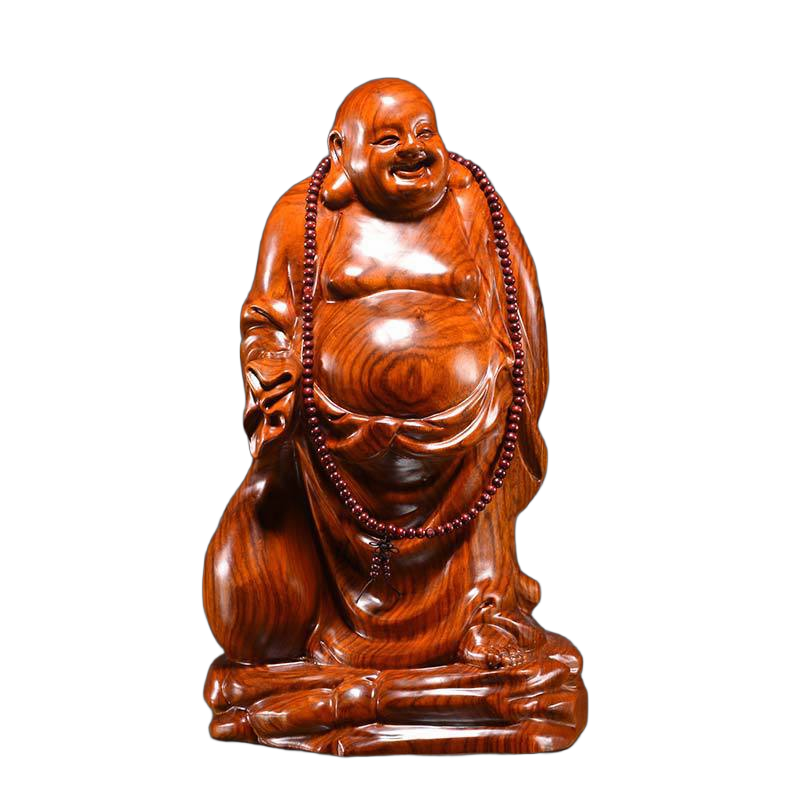
Rosewood Laughing Buddha (Budai) Statue
-
Dimensions: This statue measures 20 cm (approx. 7.9 inches) in height, a perfect size for display on a shelf, desk, or entryway table.
-
Rich Symbolism: Featuring the iconic joyful expression, large belly, and sack, this piece symbolizes happiness, contentment, and abundance.
-
Warm Aesthetics: The natural grain of the pearwood provides a warm, reddish-brown finish that adds a touch of classic elegance to any space.
4. Bridging the Gap: Styling Your Statue
How do you make an ancient-style statue look at home on a modern IKEA cabinet or a sleek West Elm console? The answer lies in how you style the space around it.
- Add Natural Life: Statues pair perfectly with living elements. Place a lush, green houseplant—like a ZZ plant, a Monstera, or a classic Bonsai tree—next to your statue. The softness of the organic leaves creates a beautiful contrast against the hard lines of the stone or bronze.
- Use a Grounding Mat: If placing a heavy statue on a glass or modern wood table feels too harsh, place a small bamboo runner, a piece of raw linen, or a decorative wooden tray underneath it. This creates a dedicated “stage” for the piece, bridging the gap between the statue and the modern furniture.
- Embrace Symmetry (or Intentional Asymmetry): If you are placing Feng Shui guardian lions (Foo Dogs) or elephants, they always come in pairs and should flank an entrance or a focal point symmetrically. For a single Buddha, asymmetrical styling works best—place the statue slightly off-center on a console table, balanced by a tall lamp or a plant on the other side.
5. Lighting: Bringing the Sculpture to Life
A painting needs flat light, but a sculpture thrives on shadows. If you rely solely on bright, overhead ceiling lights, your beautiful statue will look flat and lose its dramatic impact.
To create that true Zen, spa-like atmosphere in your living room in the evening, you need ambient lighting.
- Up-lighting: Place a small, low-wattage spotlight on the table, pointing slightly upward at the statue. This highlights the intricate carving of the robes or the peaceful expression on the face, creating a stunning focal point at night.
- Warm Glow: Pair your statue with a warm-toned table lamp or a Himalayan salt lamp nearby. The soft, diffused light mimics candlelight, which instantly triggers relaxation and makes the space feel like a true retreat.
Conclusion: Setting Your Intentions
At the end of the day, creating a Zen modern living room isn’t about rigidly following a textbook. It is about how the space makes you feel.
When you choose a high-quality Asian sculpture or a meaningful Feng Shui ornament, you aren’t just buying a piece of decor; you are setting an intention for your home. You are telling yourself, and your guests, that this is a place of balance, prosperity, and peace.
By carefully selecting an authentic piece, giving it the respect of proper placement, and blending it with modern textures, you elevate your living room from just a place to watch TV into a space that truly restores your soul.
Ready to find the perfect anchor for your living room? Browse our curated collection of high-quality Buddha statues and authentic Feng Shui decor, chosen specifically for their craftsmanship and positive energy.
FAQ: Common Questions About Decorating with Asian Statues
1. Is it cultural appropriation to have a Buddha statue in my home if I am not Buddhist?
This is a very valid and common question. Generally, keeping a Buddha statue in your home is seen as an act of cultural appreciation, provided you treat it with respect. The image of the Buddha represents universal concepts like peace, mindfulness, and compassion. As long as you follow basic respectful practices (keeping it clean, elevating it off the floor, and not placing it in inappropriate areas like bathrooms), it is highly welcomed.
2. What is the difference between the Meditating Buddha and the Laughing Buddha?
The sleek, usually thinner figure sitting in a lotus position is Siddhartha Gautama, the historical Buddha. This statue is ideal for creating a calm, meditative, and Zen atmosphere. The “Laughing Buddha” (Budai) is a traditional Chinese folk deity associated with joy, abundance, and contentment. If your goal is deep relaxation, go for the Meditating Buddha. If your goal is to invite lively, prosperous energy (Feng Shui), the Laughing Buddha is perfect.
3. I have a small, modern apartment. Will a heavy statue look out of place?
Not at all. In small, modern spaces, a single, beautifully crafted statue acts as a minimalist statement piece. The key is to avoid cluttering the area around it. Let a medium-sized, high-quality statue sit alone on a sleek side table or a floating shelf. Its presence will actually make the room feel more curated and spacious.
4. Do I have to “activate” or clean my Feng Shui statues?
From a Feng Shui perspective, keeping your space clean is essential for good Chi (energy) to flow. Dusting your statues regularly is important; a statue covered in dust represents stagnant energy. You don’t necessarily need a complex ritual to “activate” them, but simply placing them with positive intention and keeping the area around them tidy is enough to maintain their beneficial energy.
5. Why should I buy from a specialized store instead of a major online marketplace?
When buying statues on massive general platforms, you often encounter two major issues: poor quality (hollow, cheap plastic painted to look like metal) and improper packing. A specialized independent store focuses on curation and authenticity. We understand the weight, the material, and the cultural significance of these items. We ensure that you receive a substantial, beautifully crafted piece that arrives safely and is ready to bring genuine positive energy into your home.
