
The entryway is the primary channel for energy entering your home. In traditional Feng Shui philosophy, this architectural space is known as the “mouth of chi.” The objects placed in your foyer serve a highly practical purpose: they either invite positive, vibrant energy into your home or establish a barrier against the chaotic, negative energy from the outside world.
Placing a statue near your front door sets a clear energetic boundary and a specific intention for your living space. However, not every piece of Asian art belongs at the front door. Placing an incorrect figure—or positioning the right one improperly—can create an awkward layout and disrupt the natural flow of the room. To help you set the right intention, you can explore the curated collection of Feng Shui statues at Asian Artsy, where you will find authentic pieces crafted to suit modern Western home aesthetics.
Here is a detailed breakdown of the most effective Feng Shui statues for your entryway, the specific energy they bring, and how to place them correctly.
1. Imperial Guardian Lions (Fu Dogs) for Ultimate Protection
In ancient times, massive stone lions flanked the entrances of imperial palaces, grand temples, and the private estates of the elite. Today, scaled-down versions of these Imperial Guardian Lions, commonly known in the West as Fu Dogs, remain the absolute most popular choice for entryway protection.
Fu Dogs are fierce, mythical protectors designed to act as an energetic barrier against negative forces or ill intentions. They are uniquely designed to work as a team and are always placed in pairs to represent the fundamental balance of yin and yang. The male lion typically rests his right paw on a decorated sphere, which represents the physical world, global structures, and dominion over external matters. The female lion rests her left paw on a playful cub, representing nurture, the cycle of life, and the protection of the people residing inside the home.
How to place them:
Fu Dogs must always be positioned looking outward toward the door, actively guarding the entrance. They should never face the inside of the house. When you are standing inside your foyer looking out the front door, the male lion should be on your left side, and the female lion should be on your right. You can place them on an entryway console table or flank them on the floor just inside the door frame, provided the statues are large enough to sit on the floor gracefully.
2. The Laughing Buddha for Joy and Abundance
The Laughing Buddha, also known as Maitreya, is recognized globally by his wide, infectious smile and exposed belly. He represents happiness, contentment, and abundant good luck. Placing a Laughing Buddha in your entryway sets an immediate welcoming, lighthearted tone for anyone walking into your house. It serves as a visual and energetic cue to leave daily stress, work fatigue, and anxiety outside, allowing you to step into a space of pure joy.
Depending on the specific design of the statue, the Laughing Buddha might be carrying different auspicious items. A sack over his shoulder symbolizes that he collects your sadness and replaces it with wealth. A Wu Lou (gourd) in his hand promotes good health and longevity. Gold ingots at his feet symbolize an influx of financial prosperity.
How to place him:
The Laughing Buddha should generally face the main door to greet the chi entering the house with positivity. Because Buddha statues carry a significant level of cultural and spiritual respect, he should never be placed directly on the floor. Place him on a neat, clutter-free entryway table at least 30 inches above the ground, allowing him to be at eye level with the incoming energy.
3. Pi Xiu for Drawing and Guarding Wealth
If your primary focus for the year is career growth, business success, or financial stability, the Pi Xiu (also spelled Pi Yao) is a highly recommended entryway statue. In Asian mythology, the Pi Xiu is a powerful celestial creature with the head of a dragon, the body of a horse, and the sharp claws of a lion. Legend states that the Pi Xiu consumes gold, silver, and jewels but has no way to excrete them, making it the ultimate symbol of accumulating and retaining wealth.
Unlike the Laughing Buddha, which offers warm and welcoming energy, the Pi Xiu is a working guardian. It actively pulls in wealth energy from the outside world and aggressively prevents the money already inside your home from “leaking” out through unexpected expenses or bad investments.
How to place it:
The Pi Xiu should be placed on your entryway console table facing toward the front door, but it must be slightly angled. Do not point the Pi Xiu directly dead-center at the door, as the direct center path is reserved for the main, unobstructed flow of chi. An angled view toward the entrance allows the creature to comfortably “catch” wealth and opportunities as they pass by your home.
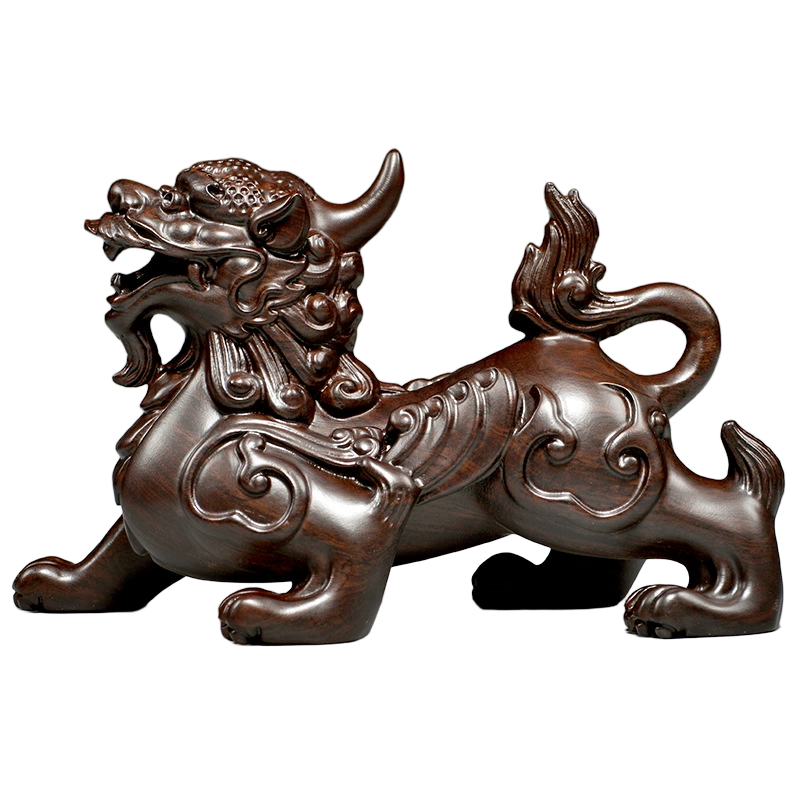
Ebony Wood Pixiu Statue
-
Ideal Dimensions: Measures 16 cm (6.3 inches) in length, perfect for display on a desk, shelf, or entryway table.
-
Rich Ebony Wood: Crafted from beautiful ebony wood, showcasing a deep, polished finish that highlights its intricate details.
-
Symbol of Prosperity: Features the legendary Pixiu, a powerful Chinese mythical creature symbolizing wealth and protection.
4. Guan Yin (The Goddess of Mercy) for Compassion and Peace
Guan Yin is the ultimate embodiment of compassion, mercy, and deep serenity. While she is deeply rooted in Buddhist traditions, her statues are widely appreciated in Western homes for the profound sense of calm and elegance they bring to a living space.
If your home faces a busy, noisy street, or if you feel like the energy coming into your house from the workplace is too aggressive or rushed, a Guan Yin statue acts as an exceptional energetic buffer. Her presence neutralizes harsh, chaotic energy and instantly promotes a peaceful, harmonious environment the moment you turn the key and step inside.
How to place her:
Unlike fierce protective statues such as Fu Dogs or Pi Xiu, Guan Yin should not face the door directly as a “guard.” Her energy is entirely different. Instead, place her facing the interior of the house, or positioned sideways on the entryway table, gently welcoming people as they walk in. Ensure the area immediately around her is kept impeccably clean and free of heavy, dominating objects.
5. Ganesha for Removing Obstacles
While primarily a revered Hindu deity, Ganesha statues have become incredibly popular in broader Asian art and international Feng Shui practices due to his universal and highly relatable symbolism. Known universally as the Remover of Obstacles and the Lord of Beginnings, Ganesha is an excellent figure to greet you when you come home. He symbolizes a smooth, unobstructed path through daily life, academic pursuits, and business endeavors.
How to place him:
Ganesha is typically placed facing the main entrance. The philosophical idea is that his steady gaze purifies the energy entering the home and removes any energetic blockages, bad intentions, or daily hurdles from crossing the doorway. Like the Buddha, he should be elevated respectfully on a table or dedicated shelf.
Material Matters: Wood, Metal, or Stone?
When selecting an entryway statue, the material is not just about matching your interior design aesthetic; it also interacts with the directional energy of your front door based on the Five Elements (Wu Xing). While you do not have to be overly strict about this, keeping the material in mind helps perfectly balance the space.
- Metal Statues (Brass, Bronze, Copper): Best suited for homes where the front door faces North or Northwest. Metal energy cuts through stagnant, lazy energy and is heavily associated with mental clarity, precision, and career focus.
- Wood Statues: Best suited for East and Southeast-facing doors. Wood represents natural growth, vitality, healing, and family harmony.
- Stone and Resin Statues: Ideal for Earth sectors like the Northeast or Southwest. Heavy stone brings a grounding, stabilizing energy to a busy household that feels too chaotic.
General Rules for Entryway Displays
Placing a statue isn’t a magic trick that will instantly solve all your household problems, but it does help you maintain an organized, highly intentional space. Keep these practical rules in mind to get the most out of your Asian art pieces:
Keep them elevated:
Whether it’s a deity, a Fu Dog, or a mythical animal figure, Asian art statues carry a certain level of cultural and spiritual respect. Never place them directly on the floor unless they are massive architectural pieces designed for the ground. Always use a console table, a dedicated stool, or a secure wall shelf.
Avoid visual clutter:
A beautifully cast brass Pi Xiu loses all of its energetic impact if it is buried under a pile of junk mail, car keys, and old receipts. The entryway should be remarkably clear so energy can flow inward smoothly. If your foyer is too small or cluttered for a large table and statue, do not force the layout. Instead, you can hang a protective Feng Shui amulet on the wall or the door handle. Amulets take up zero surface space while still serving the exact same energetic purpose.
Light it up properly:
Shadowy, dark corners breed stagnant energy (yin energy). Make sure your entryway statue is well-lit, either by natural light from a nearby window or an elegant small lamp placed directly on the console table. Proper lighting activates the statue’s presence in the room.
Frequently Asked Questions (FAQ)
1. Can I place a Buddha statue directly facing the front door?
Yes, but it strictly depends on the type of Buddha. A Laughing Buddha is excellent when placed directly facing the main door, as he actively welcomes in joyful and prosperous energy. However, a meditating Buddha (Siddhartha Gautama) is much better suited for a quieter, more reflective area like a living room or study, facing inward to promote internal peace rather than guarding the door.
2. Do I really need two Fu Dogs, or is one enough?
You should always use a pair. In Feng Shui philosophy, Fu Dogs represent the necessary, delicate balance of yin and yang energies. Using only one disrupts this natural balance and is generally believed to cause instability in the home’s energy. They operate as a unified team; keep them together.
3. What if my entryway is too small for a console table and statues?
Do not crowd a small space, as blocking the physical walking pathway also completely blocks the energetic pathway. If you lack surface area, skip the statues entirely. Instead, hang a traditional Feng Shui amulet, such as a mystic knot, a brass Wu Lou, or ancient Chinese coins, on the wall near the door or on the doorknob itself.
4. Is it okay to buy these statues just for decoration, even if I don’t follow Feng Shui?
Absolutely. Many Western homeowners buy Asian arts and statues simply because they deeply appreciate the craftsmanship, the rich history, and the striking aesthetic. You don’t need to be a Feng Shui expert to enjoy a beautiful piece of art. The placement rules mentioned above actually align perfectly with basic interior design principles—keeping art elevated, well-lit, and uncluttered looks excellent in any home.
5. How do I maintain or clean these statues?
Keep them completely free of dust. In Feng Shui, a dusty, neglected statue symbolizes ignored wealth or heavily stagnant energy. Simply wipe them down regularly with a dry or slightly damp microfiber cloth. Avoid using harsh chemical cleaners, especially on delicate materials like natural wood or hand-painted resin, to preserve their original finish and integrity.
