Ever walked into a friend’s house and immediately felt your shoulders drop? You can’t quite put your finger on it. The furniture isn’t necessarily expensive, and the lighting is totally normal, but the space just feels good. On the flip side, we’ve all been in rooms that make us feel on edge, tired, or inexplicably anxious.
This isn’t magic, and it’s not just in your head. It’s energy. In ancient Chinese culture, there is an entire system dedicated to understanding and shaping this subtle energy in our living spaces. It’s called Feng Shui.
If you appreciate Asian art or are simply looking for a way to make your home feel more like a sanctuary, you’ve probably heard the term thrown around. But what is it, really? And more importantly, how can simply placing the right art piece—like a Buddha statue, a traditional amulet, or a Tsatsa—actually shift the vibe of your room?
Let’s break it down without all the confusing jargon.
What Exactly Is Feng Shui?
Literally translated, “Feng” means wind and “Shui” means water. In traditional Chinese philosophy, wind and water are the two natural elements that flow freely, carrying life and shaping the earth. Feng Shui is essentially the practice of arranging your living space to mimic that natural, harmonious flow.
Think of it as ancient interior design that prioritizes how a room makes you feel rather than just how it looks. It’s based on a very practical idea: our environment deeply affects our mood, our daily habits, and even our luck. When your home is set up to support you, daily life tends to feel a little smoother.
A big part of Feng Shui revolves around the concept of “Qi” (pronounced chee). Qi is the life force or energy that flows through everything. If your home is highly cluttered, dark, or arranged awkwardly, the Qi gets stuck. Stagnant energy is what makes a room feel heavy or stressful. But when you arrange your furniture thoughtfully, bring in good lighting, and intentionally place meaningful art pieces, the Qi flows smoothly—much like a gentle breeze through an open window.
How Do Art Pieces and Statues Shift the Vibe?
You might be wondering: “Okay, I get why clearing out a messy closet helps, but how does a statue actually change the energy of a room?”
It comes down to intention, focus, and symbolism. In Feng Shui, every single object in your home carries its own energetic weight. A pile of unpaid bills on the kitchen counter radiates stressful, chaotic energy. On the other hand, a beautifully crafted piece of art radiates grounded, intentional energy.
At Asian Artsy, we focus on pieces that have been used for centuries to anchor and elevate the energy of a space. When you place a specific statue or a traditional craft in your home, you are literally putting a physical reminder of peace, protection, or abundance into your daily environment. It sets the tone for the room.
Here is a closer look at how different types of Asian art can improve your home’s energy.
1. Buddha Statues: The Ultimate Calming Anchor
If there is one piece of art that instantly changes the temperature of a room, it’s a Buddha statue. You don’t need to be a practicing Buddhist to appreciate or benefit from the calm energy these statues bring.
Different poses mean different things. For example, a Meditating Buddha (usually sitting with both hands resting in his lap) is perfect for creating a quiet, serene vibe. It is a visual cue to slow down and take a breath. On the other hand, the popular Laughing Buddha is traditionally associated with joy, abundance, and good luck. Placing one in a common area brings a lighter, more welcoming energy to the space.
Because these statues represent enlightenment and peace, they act as an “anchor” for positive Qi, absorbing the frantic energy of daily life and radiating stillness back into the room.
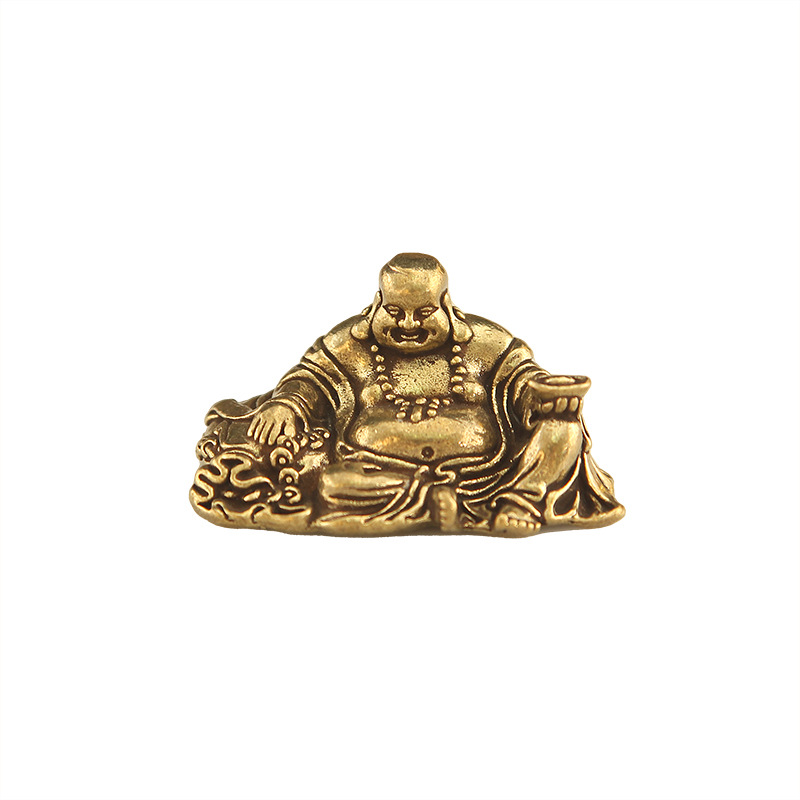
Brass Laughing Buddha Statue
-
Compact Dimensions: Approximately 4.1 cm (1.6 inches) in length and 2.1 cm (0.8 inches) in height, making it a versatile decorative piece.
-
Intricate Brass Work: A detailed sculpture crafted from solid brass, featuring the Laughing Buddha’s iconic joyful expression and traditional robes.
-
Symbol of Positivity: The Laughing Buddha is widely regarded as a symbol of happiness, contentment, and prosperity.
2. Feng Shui Statues: Bringing in Specific Energies
While a Buddha statue is broadly about peace and balance, traditional Feng Shui statues are usually placed with a very specific goal in mind. These often feature mythical creatures or symbolic animals.
For instance, if you are working hard on your career or trying to build your savings, a Pi Xiu statue is a classic choice. In Asian culture, this mythical creature is known as a powerful magnet for wealth and good fortune.
If you live in a busy city or feel like your home needs a bit of energetic “guarding,” Foo Dogs (often placed in pairs) are traditional protectors. Placing them near your entrance symbolically blocks negative energy from coming through the front door. They aren’t just cool conversation pieces; they set a boundary for the energy entering your home.
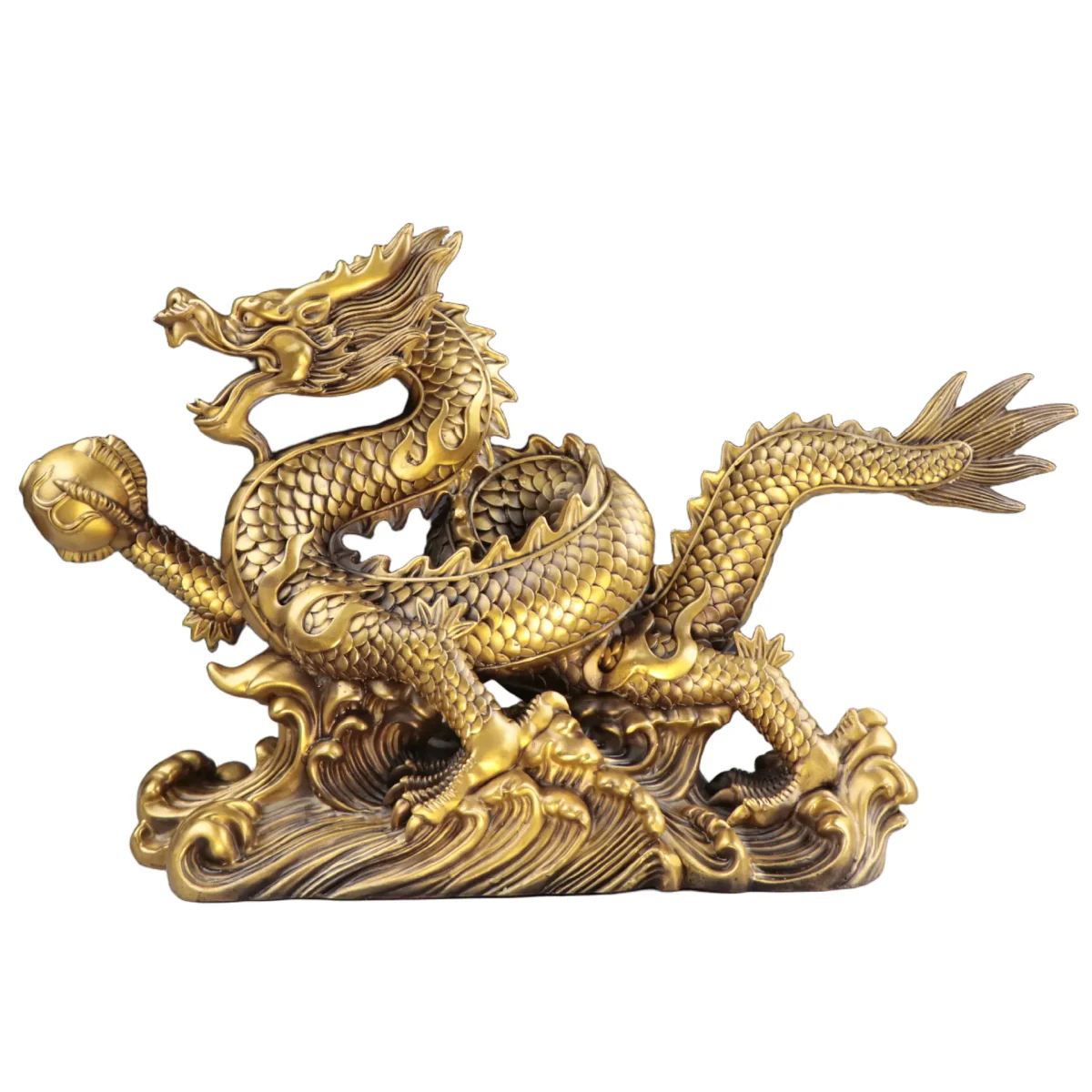
Feng Shui Dragon with Wisdom Pearl Brass Statue
25 x 14 cm (9.8 x 5.5 inches), 1.2 kg
3. Amulets: Small but Mighty Protectors
Amulets are a bit different because they are deeply personal. Traditionally, these are smaller, blessed items meant to offer protection, health, or good fortune to the owner. While many people wear them, keeping an amulet in your home works just as well.
You can place a protective amulet on your work desk to ward off the stress of your 9-to-5, or keep one on your nightstand to encourage peaceful sleep. Because they are smaller, they are a great, subtle way to introduce positive Feng Shui into your space without redecorating an entire room. They remind you of your personal intentions every time you see them.
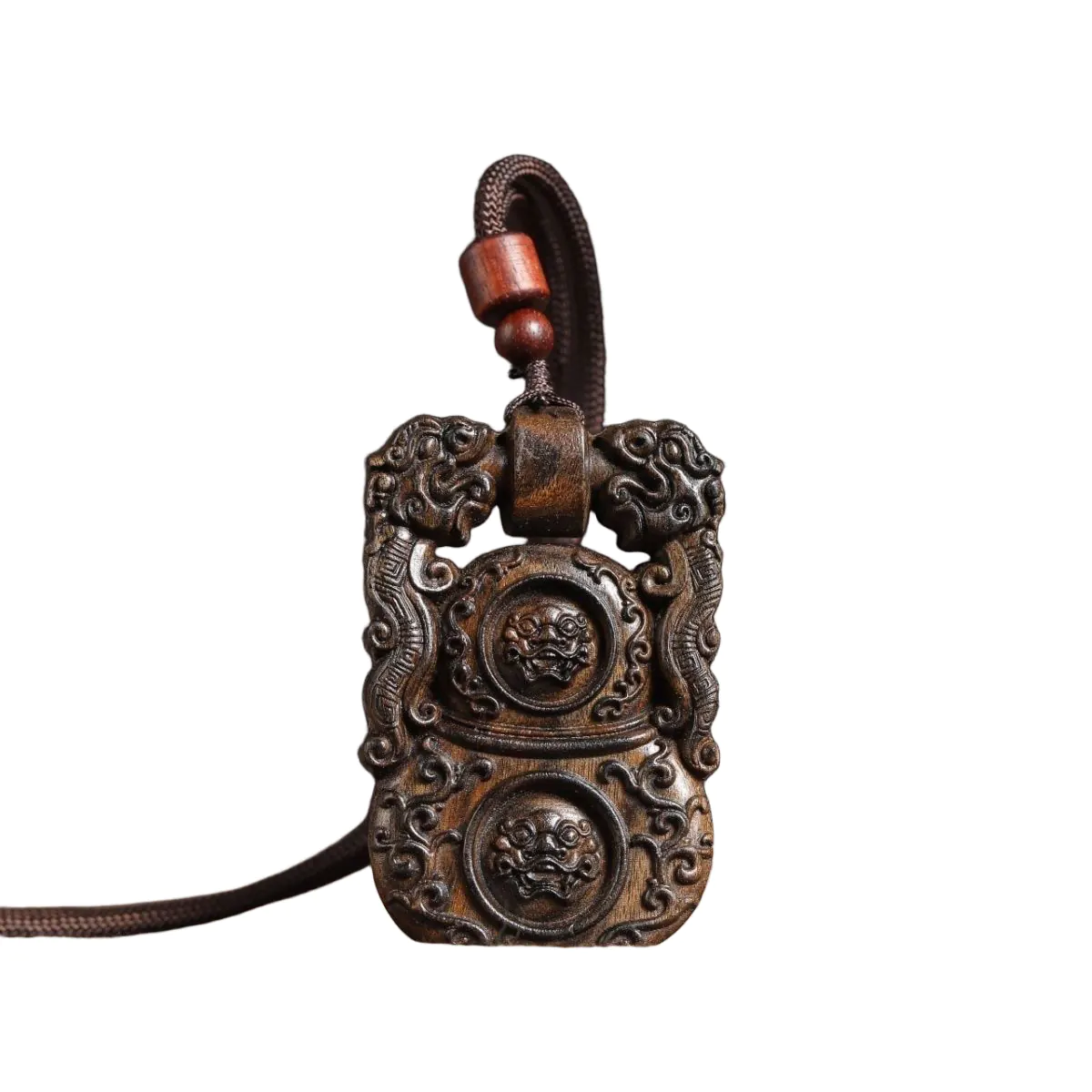
Agarwood Tiger Talisman – 4x6cm (1.6″x2.4″) Natural Aromatic Amulet for Protection & Wealth
- Rare Agarwood – Sustainably sourced, naturally aromatic wood prized in Chinese tradition for its calming scent and spiritual energy.
- Symbol of Power & Prosperity – The tiger is a revered guardian in Eastern culture, believed to ward off negativity and attract abundance.
- Perfect for Daily Wear or Display – Comes with a durable cord for hanging on your car mirror, office desk, or as a personal talisman.
- Size: 4cm x 6cm (1.6″ x 2.4″) – Compact yet substantial in presence.
4. Thangka and Tsatsa: Adding Depth to a Quiet Corner
If you want to create a specific meditation space or a reading nook, you might want to look into Thangkas and Tsatsas.
A Thangka is a traditional Tibetan Buddhist painting, usually depicting a deity, a mandala, or a scene. A Tsatsa is a small, beautifully detailed clay plaque or figure, stamped from a mold. Both of these are traditionally used as focal points for meditation.
In a normal home setting, hanging a Thangka or displaying a Tsatsa on a shelf adds an immediate sense of history and spiritual depth. Because these items take immense patience and focus to create, they carry the grounded energy of the artisan. Having them in a room makes the space feel more intentional and less superficial.
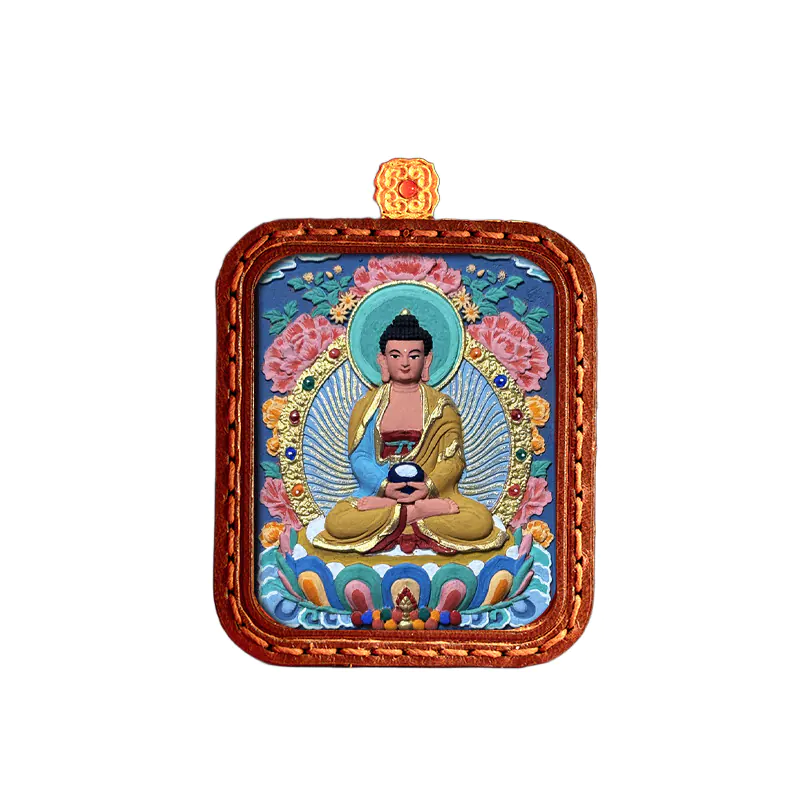
Hand-Painted Tibetan Thangka Tsa-Tsa of Amitabha Buddha
4.88 x 4.15 cm (1.92 x 1.63 in)
Practical Tips: Where to Put Your Art
You don’t need to hire an expensive consultant or tear down walls to get this right. Here are a few practical, easy-to-follow tips for placing your new pieces:
- The Entryway (The Mouth of Qi): The front door is where energy enters your home. This is a great place for protective pieces like Foo Dogs, or a welcoming Laughing Buddha facing the door to greet the energy coming in.
- The Living Room: This is the center of family life. A calm, seated Buddha statue or a beautiful Thangka works perfectly here to promote harmony. Just make sure the art is placed at eye level or higher—it’s considered disrespectful to place spiritual statues directly on the floor.
- Your Home Office: If you want to boost your focus and attract success, place a wealth-attracting statue (like a Pi Xiu or a dragon) on your desk.
- Where NOT to put them: Keep spiritual items, especially Buddha statues and Tsatsas, out of bathrooms and kitchens. These rooms have draining or chaotic energy, which clashes with the peaceful vibe of the art.
Keep It Simple
At the end of the day, the best way to improve your home’s energy is to fill it with things that make you feel good. Feng Shui shouldn’t make you anxious about getting the angles perfectly right. If an art piece makes you smile or helps you take a deep breath after a long day at work, it’s already doing its job.
FAQ: Practical Questions About Feng Shui & Art
1. Do I need to “believe” in Feng Shui for these statues to work?
Not at all. Think of it more as environmental psychology. Even if you don’t believe in the concept of “Qi,” having a peaceful, beautifully crafted piece of art in your line of sight naturally calms your nervous system. It’s about creating an environment that feels good to live in.
2. Can I place a Buddha statue or a Tsatsa in my bedroom?
Generally, it is recommended to keep religious or highly spiritual items out of the bedroom, as the bedroom is meant for rest and intimacy. The living room, an entryway, or a dedicated home office are much better choices. If you live in a studio apartment, try to place the statue so it isn’t directly facing the bed.
3. I want to attract better financial energy. What is the best statue for that?
For wealth and abundance, the Pi Xiu or the Laughing Buddha are the two most popular choices. Place them in your home office or in the living room, ideally facing toward the inside of the house (so the wealth flows in, not out the front door).
4. How do I “cleanse” the energy of a new amulet or statue when I receive it?
When you receive a new piece from Asian Artsy, a simple physical cleaning with a soft, dry cloth is a great start. If you want to energetically cleanse it, you can lightly smudge it with some sage or incense, or simply leave it in a spot with natural sunlight for a few hours to clear any stagnant energy from its journey in the mail.
5. What exactly is a Thangka or Tsatsa?
A Thangka is a traditional, intricate Tibetan painting on cotton or silk appliqué, usually depicting spiritual themes. A Tsatsa is a small votive tablet made of clay, pressed into a highly detailed mold, often containing small mantras inside. Both are authentic, traditional Asian art pieces that are perfect for adding a sense of grounded, historical peace to your home.
